- Environmental Management Governance
- Environmental Management Strategy
- Environmental Management Activities
Environmental Management
Environmental Management Governance
Environmental Management Organization
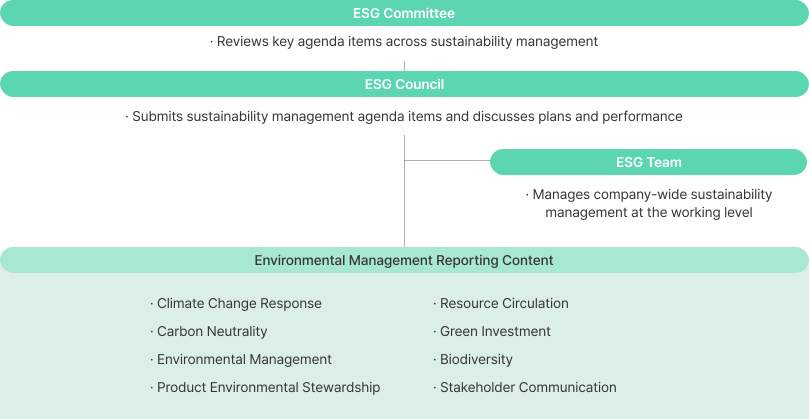
The Board of Directors holds the highest decision-making authority over Coway's environmental management. Under the Board, the ESG Committee regularly reviews and pre-deliberates key agenda items across sustainability management, including environmental management. In 2025, items such as the recalibration of GHG emission reduction targets and a report on the establishment of a biodiversity policy were approved and reported through the ESG Committee.
The ESG Council regularly discusses agenda items, action plans, and performance, and the ESG Team oversees company-wide sustainability management performance. Strategies and improvement initiatives are reported to the Board of Directors twice a year. Representatives from relevant departments participate to review execution status and discuss future direction.
Coway operates the Environment, Safety and Certification Team as the company-wide unit dedicated to environmental management, carrying out tasks such as developing GHG reduction strategies, measuring and analyzing environmental data, and building internal and external ESG environmental infrastructure.
Environmental Management Reporting Structure
Environmental Management Policy
Guided by the core value of "A Healthy Environment, Happy People," Coway provides eco-friendly products and services and works to reduce its environmental impact across all business activities. Coway formalized its commitment by issuing an Environmental Management Declaration in 2006, and in 2012 established its Environmental Management Policy, focusing on legal compliance and building stakeholder trust. The Policy applies to all worksites, and Coway also encourages subsidiaries and partners to participate.
Coway Environmental Policy
Environmental Policy- 01.Overview
- Purpose of Establishment
- Scope of Application
- 02.Basic Principles
- Eco-friendly Business Investment and Innovation
- Compliance with Environmental Laws and Creation of Value
- Compliance with Precautionary Principles
- Development of Sustainable Technology
- Transparent Disclosure of Information
- 03.System Implementation
- Governance
- Training and Promotion
- 04.Risk Management
- Identification of Risks
- Assessment and Analysis of Risk
- Risk Reduction
- Disclosure of Risk Status and Results
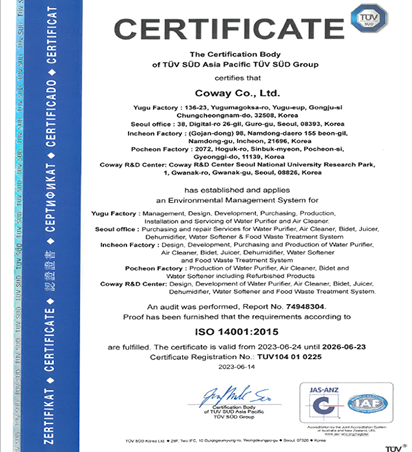
Environmental Management System Certification
All of Coway's domestic worksites hold ISO14001 certification, enabling Coway to manage its Environmental Management System in line with international standards. Surveillance audits are conducted annually and renewal audits every three years, providing regular reviews of environmental performance. Through this management system, Coway identifies and assesses environmental impacts arising from its business activities and manages environmental risks through continuous improvement activities.
ISO14001 Certification by Site
- Certified Sites Seoul Office, Yugu Plant, Incheon Plant, Pocheon Plant, Coway R&D Center
-
Certification
Validity Period June 24, 2023 to June 23, 2026 (Renewal audit: every 3 years/Surveillance audit: annual)
Environmental Management Strategy
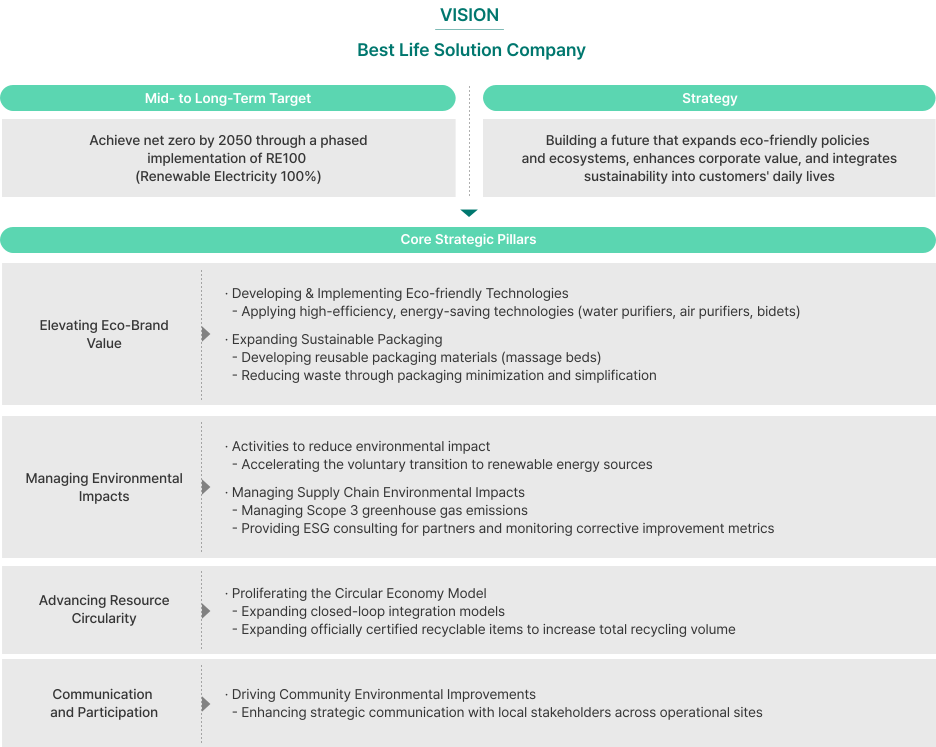
Environmental Management Framework
Beyond providing eco-friendly products and services, Coway has established a strategy to reduce environmental burden across our entire value chain. Coway aims to achieve net zero by 2050. To this end, it is progressively pursuing RE100. Coway has also defined four core initiatives: maximizing environmental brand value, managing environmental impact, promoting resource circulation, and encouraging communication and participation. Coway will embed these initiatives into its company-wide environmental management framework by 2030. Coway also links them to each department's Key Performance Indicators (KPIs) to ensure they translate into tangible outcomes.
Environmental Management Strategy Framework
Environmental Management KPI
| Evaluation Target¹⁾ | Key Performance Indicators (KPIs) | Evaluation Methodology |
|---|---|---|
| Executive Management | Expanding the use of recycled resins (closed-loop) | Differentiated evaluation based on each department's performance against established targets |
| Senior Executives | Expanding the use of recycled resins (closed-loop) | |
| Sourcing and integrating hazardous substance-reducing materials in filters |
1) Executive Management: Officers; Senior Executives: C-Suite (CTO, CFO, etc.)
Environmental Management Activities
Employee Environmental Training
Coway runs environmental management training programs for employees covering topics such as climate change, environmental regulations, and ESG. By participating in regular CDP Climate Change training, Coway monitors the latest trends in GHG emissions calculation. Coway also engaged external experts to train ESG Council members on Life Cycle Assessment (LCA) to prepare for the EU's Carbon Border Adjustment Mechanism (CBAM) and Digital Product Passport (DPP). To raise overall awareness of ESG, the "ESG Insight: Environmental Impact of Climate Change" course was offered to ESG-related departments. Going forward, Coway plans to expand the scope of training beyond employees to include partners, thereby driving company-wide environmental capabilities.
Employee Environmental Training Results
| Category | Training Program | Participants | Training Hours | Method |
|---|---|---|---|---|
| Climate Change | CDP Climate Change Training | 1 | 24 hours per person | In-person |
| CDP Scope 3 Training | 1 | 8 hours per person | In-person | |
| Environmental Regulations |
Environmental Design Standards Training (RoHS technical documentation, separate disposal labeling, etc.) |
17 | 1.5 hours per person | In-person |
|
Overseas Environmental Regulation Response Strategy (EU-CBAM/DPP Response, Understanding LCA) |
22 | ESG Council | Online (video) | |
| ESG Training |
Employee ESG Training, ESG Insight: Environmental Impact of Climate Change (ESG Basics/Climate Change) |
46 | 1.5 hours per person | In-person |
Employee Campaigns
In observance of World Water Day, designated by the United Nations on March 22 each year, Coway conducts an annual employee-led water environment protection campaign to raise awareness of water scarcity and water pollution. As part of its ESG environmental management activities, Coway runs the Blue Water Keeper Challenge, encouraging water-saving practices that can be incorporated into daily life. Through small everyday actions —such as using a cup when brushing teeth, using a basin for washing dishes, running full loads of laundry, and turning off the faucet while washing hands—Coway fosters a company-wide culture of water resource conservation.
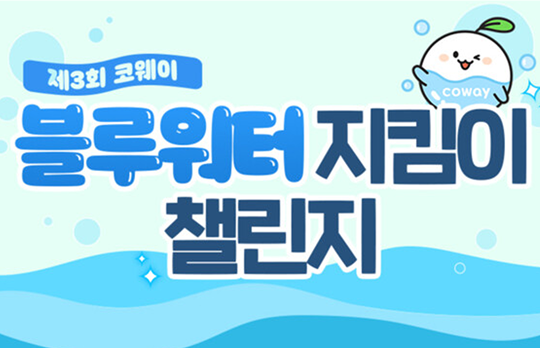 Blue Water Keeper Challenge
Environmental Regulation Monitoring
Coway has built and continuously enhanced its environmental regulation management system to address global product environmental regulations. Through the Environment Regulation Information Management System (ERIMS¹⁾), Coway systematically monitors, analyzes, classifies, and disseminates applicable regulations. This framework enables each department to respond to regulatory changes swiftly and accurately. To minimize regulatory risks, Coway continues to expand the countries and scope of regulations under monitoring while strengthening its analytical and response capabilities.
1) ERIMS: Environment Regulation Information Management System
Environmental Regulation Information Management System (ERIMS)
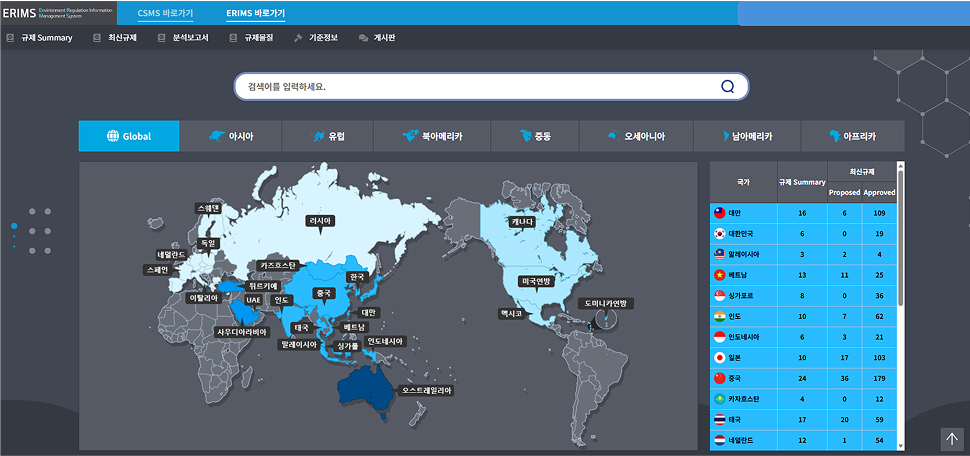
- Preliminary research and analysis of domestic and international environmental regulations and laws
- 01. Global RoHS (EU/K-RoHS, etc.)
- 02. Product Resource Circulation (Recovery & Recycling, etc.)
- 03. Product Chemical Safety
- 04. Globally Regulated Substances (PFAS, REACH SVHC, etc.)
- 05. Product Energy Efficiency (Energy Efficiency Grade, Energy Star, etc.)
- 06. Other Product-related Environmental and Safety Matters
Environmental Regulation Response Process
