- Supply Chain Management Governance
- Supply Chain Management Strategy
- Supply Chain Risk Management
- Conflict Minerals Management
- Supplier Development
Supply Chain Management
Supply Chain Management Governance
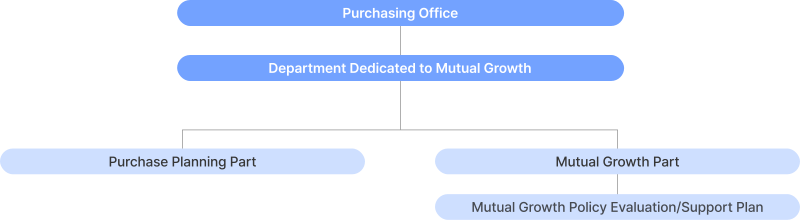
Mutual Growth Organization
To build sustainable supply chain partnerships, Coway has established a dedicated organization for Mutual Growth and has established an operational framework driven by four core values. Going beyond simple transactional relationships, Coway is institutionalizing a shared accountability and performance-sharing framework with partners, thereby evolving these partnerships to systematically elevate sustainability standards throughout the entire value chain.
Governance Structure for Promoting Mutual Growth
Fair Competition Principles Organization
To internalize Fair Trade principles as an embedded corporate norm, Coway has established the “Fair Competition Compliance Committee” and operates a self-monitoring system. By designating dedicated departments and personnel, Coway periodically reviews compliance with the related guidelines and takes proactive steps to preempt non-compliance risks before they materialize.
Organizational Chart for the Fair Competition Compliance Committee

Supply Chain Policy
Supply Chain Sustainability Policy
To systematically manage sustainability across the entire supply chain, Coway has established the "Coway Supply Chain Sustainability Policy" and adopted it as the foundational guiding principle and direction for supply chain management. This policy presents the basic principles and goals of supply chain management with a focus on key areas, including environment, labor and human rights, safety and health, ethics, and governance, and reflects an approach that recognizes partners not as mere business partners but as partners in sustainability management. Coway assesses the ESG status of its partners in accordance with this policy. Where it identifies gaps, it strengthens supply chain management by requesting corrective actions, supporting improvement activities, and linking suppliers to targeted capability-building programs. The policy also serves as a top-level standard across individual management tools, including the Supplier Code of Conduct, evaluations and due diligence, and training and support. It provides the foundation for Coway's responsible supply chain and long-term value creation.
Supplier Code of Conduct
Since 2017, Coway has established and operated the "Coway Supplier Code of Conduct," which clearly sets out the specific minimum standards of conduct that suppliers are required to observe. The Code of Conduct is based on key domestic and international standards. These include the UN Universal Declaration of Human Rights, the UN Guiding Principles on Business and Human Rights¹⁾, the EICC²⁾ Code of Conduct, the RBA³⁾ Code of Conduct, and the Labor Standards Act. It serves as an implementation standard for managing key ESG risks across the supply chain in areas such as labor and human rights, safety and health, the environment, and ethics. With major active partners, the obligation to comply with the Code is formally codified through contracts, and systematically monitored and enforced through new partner selection, periodic comprehensive evaluations, and supply chain ESG risk screening or supply chain due diligence. By continuously reflecting revisions to global guidelines in the Code, Coway is advancing the level of its supply chain management to be aligned with international standards.
Supply Chain Management Strategy
Supply Chain Management Implementation Framework
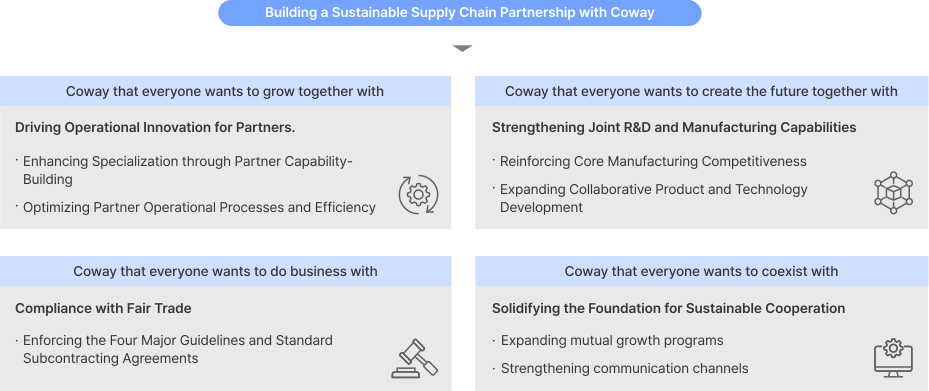
Under the vision of "The Partner of Choice for Sustainable Growth," Coway is building sustainable supply chain partnerships. Coway provides support tailored to each partner's size and characteristics, and improves operational processes to enhance collaboration. It also works with suppliers to jointly develop product technologies and strengthen manufacturing capabilities. By operating the Four Major Fair Trade Guidelines and the Standard Subcontracting Agreement, Coway has established a transparent and fair transactional order, and is shaping an ecosystem in which partners grow together through Mutual Growth programs and ongoing communication channels.
Strategy for Promoting Mutual Growth
Supply Chain Risk Management
Integrated Supply Chain Management Process
Supply Chain Sustainability Management Process
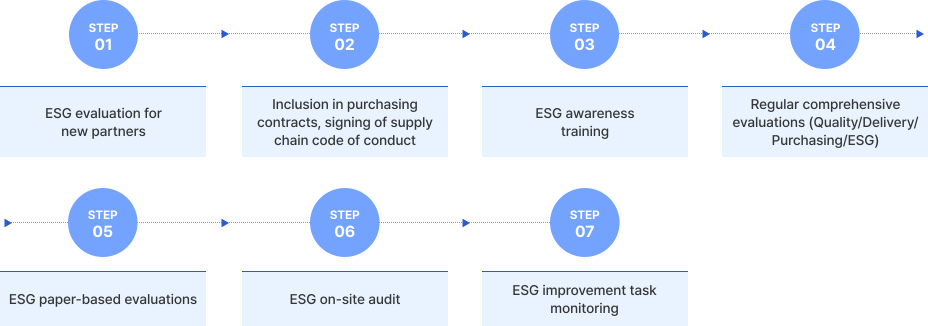
Through an integrated governance framework spanning the entire procurement life cycle, Coway systematically flags and mitigates ESG risks across its supply network on a phased basis. The company enforces rigorous screening to verify that new suppliers meet critical sustainability criteria upon entry, while conducting periodic comprehensive evaluations and robust ESG audits for existing partners. By linking outstanding assessment outcomes directly to performance-based incentives, Coway effectively motivates its suppliers to institutionalize sustainable practices throughout the value chain.
Supply Chain Management Process
New Supplier ESG Screening
To cultivate a resilient and competitive supply chain, Coway has prepared the "Guidelines for the Registration and Evaluation of New Partners" and systematically manages the registration and evaluation of new partners based on clear criteria. Financial evaluations and on-site due diligence are conducted in parallel to comprehensively review the overall capabilities and sustainability management standards of partners. During on-site due diligence, relevant departments visit the partner's worksite directly. The review covers several areas, including management, supply chain operations, technological capabilities, quality and production, materials management, and environmental compliance. Coway also examines the soundness of worksite operations and the responsible management framework. This includes compliance with statutory labor standards, such as non-discrimination and minimum wage. Evaluation results are submitted to the “Partner New Registration Review Committee," and final corporate onboarding is granted exclusively to candidates that obtain a comprehensive score of 70 points or higher.
Existing Partner Assessment
To periodically review its partners' capabilities and sustainability management, Coway enforces comprehensive periodic audits, identifying issues and presenting improvement directions through on-site reviews. In 2025, Coway evaluated 52 major partners. Top-performing partners receive substantive incentives, such as preferential volume allocation, while those with strong ESG performance earn bonus points reflected in the comprehensive evaluation.
Selection of Key Partners
As the starting point for supply chain sustainability management, Coway separately selects and systematically manages its Tier-1 significant partners. These partners are selected based on criteria such as transaction size and duration, the presence of manufacturing facilities, and on-site residence, with comprehensive consideration of environmental, social, and governance (ESG) factors and business relevance. For selected Tier-1 significant partners, Coway conducts a comprehensive sustainability and risk assessment, reflecting risk factors such as each partner's country of operation, industry characteristics, and handled items to support responsible operations across the supply chain.

Supply Chain ESG Risk Management
Supply Chain ESG Assessment Process
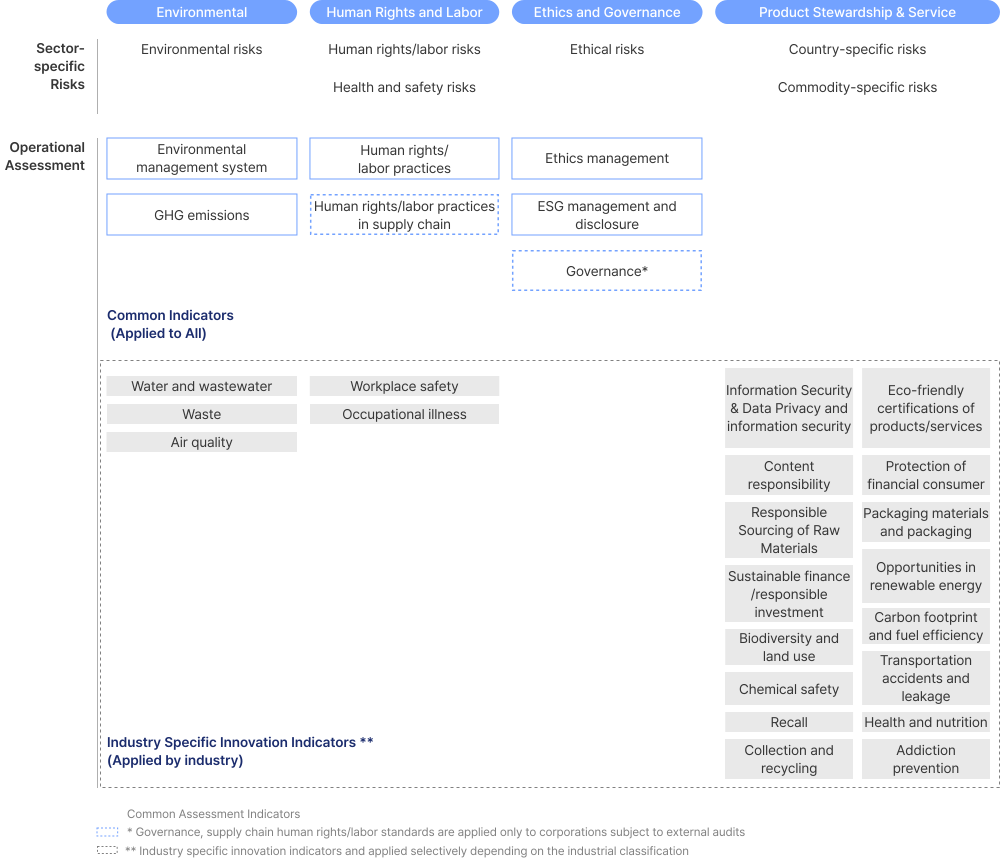
To assess and improve its suppliers' ESG management, Coway has established the "Supply Chain ESG Management Indicators" based on the UN Guiding Principles on Business and Human Rights, the EICC, and the RBA. Coway conducts desk and third-party on-site assessments of its Tier-1 significant suppliers across core areas, including human rights, statutory labor standards, environmental compliance, ethics and governance, and product and service responsibility, and shares the results with relevant suppliers through quarterly ESG consultative meetings. By offering incentives to top-performing suppliers and presenting tailored corrective action plans to suppliers identified as having substantial actual or potential negative impacts, Coway drives proactive risk mitigation from end to end. In 2025, Coway held briefing sessions and both online and offline training for 112 supplier employees to strengthen ESG awareness and capabilities and promote compliance with the Coway Supplier Code of Conduct.
Coway Supply Chain ESG Management Indicators
Desk and On-site Assessment
To alleviate compliance burdens for suppliers in responding to the strengthening of global ESG regulations, Coway directly covers consulting costs and proactively reviews potential and actual risks across human rights, environment, and ethics and governance within the supply chain. As part of these efforts, Coway and a third-party expert agency jointly conducted ESG consulting for Tier-1 significant suppliers.
To enhance assessment credibility, professional analysts reviewed ESG policies, standard contracts, and energy use records in detail, and Coway addressed any deficiencies through follow-up review, completing desk assessments for 35 suppliers. Coway then conducted on-site due diligence for five suppliers selected from these assessments, holding in-depth interviews to examine the identified risks, confirm their existence and level, and recommend specific corrective measures.
Following the assessments, Coway provides each supplier with a results report outlining its risk exposure and operational management status, driving continuous capability-building and operational remediation.
Desk and On-site Assessment Results
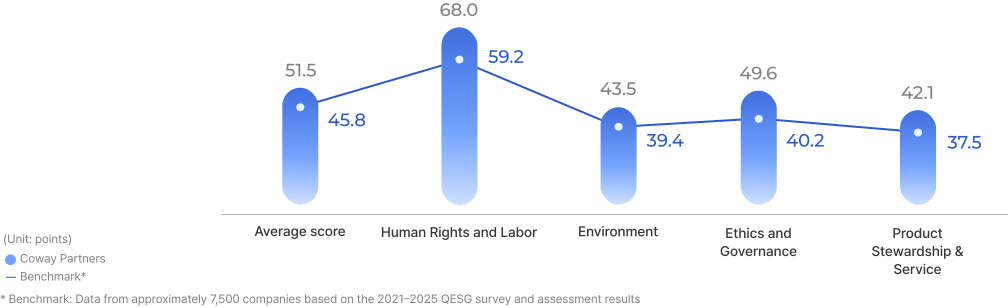
Partner ESG Improvement Support
Based on global guidance and the Coway Code of Conduct, Coway classifies and mitigates critical risk dimensions. In particular, items in the environmental, social, and ethical areas that require immediate improvement, such as the adoption of ESG policies and the management of greenhouse gas emissions, remain under close monitoring. The implementation status of these initiatives is regularly reported to the ESG Council and the ESG Committee and reflected in the formulation of company-wide supply chain strategies.
Conflict Minerals Management
Conflict Minerals Policy and Guidelines
Coway recognizes the human rights violations and environmental destruction that may arise across the entire mineral extraction, production, and distribution life cycle as serious issues, and operates a management system to prevent the use of conflict minerals. Coway continuously monitors whether conflict minerals are contained in supplied materials, including raw materials and components, and raises partner awareness through management guides and briefing sessions. Coway also continues its efforts to extend responsible mineral sourcing to its partners' sub-tier supply networks.
Conflict Minerals Management Program
Conflict Minerals Management Process
To ensure that partners recognize conflict minerals and build independent management capabilities, Coway shares relevant information through regular online briefing sessions and proactively flags potential vulnerabilities through usage status surveys. Based on its own "Conflict Minerals Management Process," Coway reviews partner management status annually. It continues to strengthen this framework so that responsible procurement is institutionalized throughout the entire supply network.
Conflict Minerals Management Process
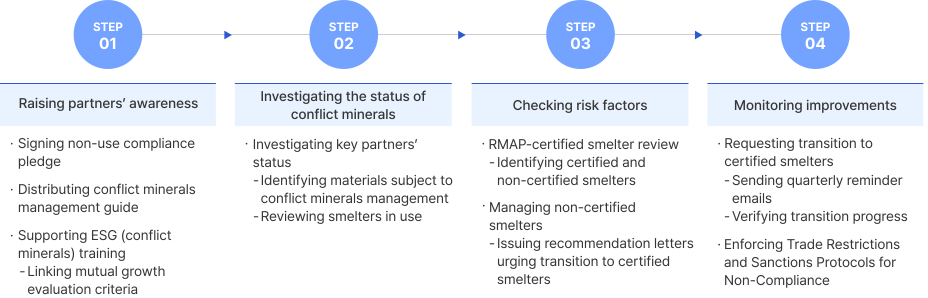
Raising Partner Awareness
To spread awareness of conflict minerals across the supply chain, Coway delivers systematic briefing sessions and specialized training for partners that use conflict minerals. The training centers on practical, operationally relevant content. It covers the background of conflict minerals management, regulatory trends in major countries, Coway's policies, the use of the CMRT¹⁾, and the verification of transactions with RMAP²⁾-certified smelters. To preempt the introduction of unethically sourced minerals into the supply chain, Coway has executed "Pledges of Compliance with the Non-Use of Conflict Minerals" with major partners. Coway has also broadened the supply chain due diligence framework to the entire supply chain by requesting compliance with the same standards not only from partners with which it directly transacts, but also from sub-tier supply networks.
1) CMRT: Conflict Minerals Reporting Template
2) RMAP: Responsible Minerals Assurance Process
2) RMAP: Responsible Minerals Assurance Process
Conflict Minerals Management Status
Coway requests that major partners submit conflict minerals information for all supplied items and identifies the status of mineral use through CMRT reports containing information on the minerals used and the smelters for each item. In particular, partners with high relevance to conflict minerals risks, such as manufacturers of circuit and electrical components, are prioritized for close review of the types and origins of minerals used to verify any links to conflict-affected areas. Coway plans to continue building a responsible supply chain by proactively addressing conflict minerals risks.
Status on Conflict Minerals Usage
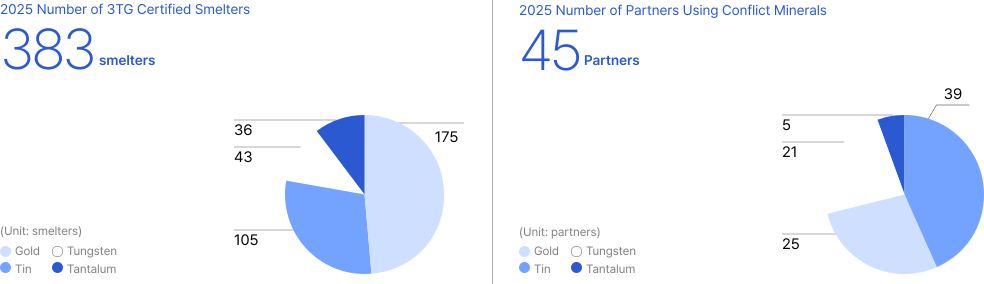
Identifying Risk Factors & Monitoring Corrective Actions
Coway systematically audits supplier Conflict Minerals Reporting Templates (CMRT) to verify active transactions with RMAP-certified smelters, and enforces transition roadmaps for partners engaging with non-certified facilities. The implementation status of corrective action plans (CAPs) is continuously monitored to ensure operational remediation and strengthen the overall responsible mineral sourcing framework. Moving forward, Coway will continually advance its supply chain due diligence standards by integrating evolving global guidelines and enhancing monitoring effectiveness.
Mutual Growth
Mutual Growth Programs
To strengthen the competitiveness of partners and build a sustainable supply chain, Coway runs Mutual Growth programs covering various areas, including technology, finance, training, and employee benefits. Coway continuously listens to on-site feedback through regular communication channels, and the input received is reviewed in consultation with relevant departments and translates input into actionable solutions to drive meaningful change. To boost work motivation and encourage long-term employment among personnel at small and medium-sized partners, Coway provides cash-equivalent welfare points linked to the Mutual Growth Mall. Recruitment difficulty is one of the most significant challenges partners face. Coway has opened a dedicated recruitment section for its partners on Saramin, a leading Korean recruitment platform. It provides this recruitment infrastructure free of charge. Coway plans to continue expanding tailored Mutual Growth programs that strengthen the fundamental competitiveness of its partners.
Mutual Growth Programs
Compliance with Fair Trade Guidelines
Based on the Four Major Fair Trade Guidelines and the "Procurement Ethics Practice Guidelines," Coway has set ethical standards across procurement operations and continues activities to embed an ethics and compliance culture. Employees participate in an annual pledge to the guidelines, and partners are informed in advance, through fair trade training, of the disadvantages that may arise from any violations. In February 2025, ethics and unfair trade prevention training and a practice pledge were conducted for all 63 members of the Procurement Office. Coway plans to continue building a transparent and fair transactional environment and to continuously support partners' ethical management practices.
Supplier VOC through the Dispute Resolution Body
The Coway Purchasing Office runs a review committee on a monthly basis based on the Four Major Fair Trade Guidelines, periodically deliberating on matters such as adjustments to subcontract payments, returns and order cancellations, and the operational status of the Subcontract Payment Linkage System. In 2024, Coway established the "Coway Dispute Resolution Body" to autonomously mediate disputes with partners, and reports received through the Ethics Management Center are handled in accordance with internal procedures. In addition, an annual Legal and Ethical Compliance Survey is conducted with partners to gather opinions on fairness, transaction satisfaction, and Mutual Growth. As a result of these ongoing communication and proactive prevention activities, Coway maintained zero subcontracting-related legal violations in 2025, and recorded zero reports and cases handled through the Dispute Resolution Body.
Subcontracting Transaction Dispute Resolution Status
| Category | Cases Received | Resolution Rate (%) |
|---|---|---|
| Performance of Subcontracting Agreements | 0 | - |
| Payment Adjustments | 0 | - |
| Termination of Contracts and Damages | 0 | - |
| Other Subcontracting Transaction Disputes | 0 | - |