Environmental Impact Management
Water Resources
Water Resources and Water Pollutant Management
Water Resources Management Strategy
Coway runs its water resources management strategy across two stages: worksite/process and product. Water used at worksites is utilized for testing during quality inspections across all stages, including product development, reliability verification, and mass production. Coway treats this water to meet domestic water standards prior to discharge. Coway monitors company-wide water consumption annually, working to improve water use efficiency and reduce unnecessary consumption. Coway also strengthens water-saving features from the development and design stage of water purifiers and bidets, contributing to water conservation at the customer level.
Minimizing Discharge of Water Pollutants
To reduce environmental impact during the wastewater discharge process, Coway classifies most of the water it uses as sewage and safely discharges it to wastewater treatment facilities through dedicated sewer lines. Coway has also improved processes to reduce water use during production. Replacing the previous method that used water for leak inspections, Coway introduced a "Waterless Test" that uses nitrogen and vacuum. This approach not only enhances inspection quality but also reduces testing time and wastewater generation. Consequently, this initiative resulted in the conservation of 5,522 tons of water in the water purifier production process in 2025.
Biodiversity
Biodiversity Policy
Coway recognizes the value of biodiversity and continues to engage in a wide range of conservation activities to safeguard it. The Korean Peninsula, where Coway's worksites are located, is home to a diverse range of climates and topography, supporting a high level of biodiversity that requires systematic conservation and management. To address this, Coway conducts priority surveys of species near its worksites and continuously monitors biological resources annually using national platforms. Coway carries out river clean-ups, donates to cultivate forests for nationally protected species, and provides ecological education for children. Through these initiatives, the company is fostering an environment where humanity and nature coexist in harmony.
Biodiversity Framework
Coway has established its own management framework aligned with the biodiversity conservation objectives of the Act on the Conservation and Use of Biological Diversity, and operates action targets for national-level conservation and sustainable use across three core areas. In 2025, Coway updated its biodiversity policy in line with the National Biodiversity Strategy, which sets the country's direction for the next five years. The policy broadly reflects international standards, including the Convention on Biological Diversity (CBD), the Convention on International Trade in Endangered Species of Wild Fauna and Flora (CITES), and the IUCN's Guidelines for Applying Protected Area Management Categories. Coway also runs region-specific detailed strategies that take into account the ecological characteristics and species diversity of the regions where its key worksites are located, including Seoul, Gyeonggi, Incheon, and Chungnam.
Biodiversity Implementation Strategy
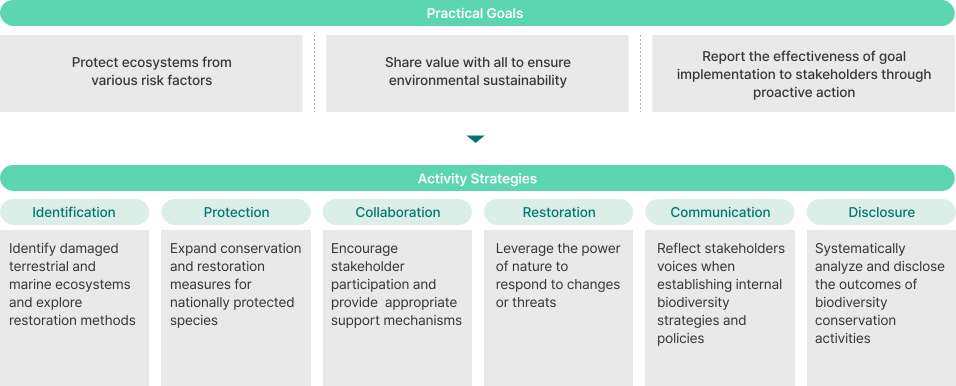
Biodiversity Risk Management
Coway recognizes the importance of natural capital and biodiversity protection in its business operations and is establishing a management framework. In line with the recommendations of the Taskforce on Nature-related Financial Disclosures (TNFD), Coway identified biodiversity risks based on the LEAP (Locate, Evaluate, Assess, Prepare) approach.
Reflecting the characteristics of its business model, Coway analyzes biodiversity impacts and dependencies across all worksites. Coway has analyzed biodiversity priority areas covering its key worksites and tracks the status of biodiversity surrounding each worksite.
Biodiversity Risk Analysis Process

Results of Dependency and Impact Assessment
Using ENCORE (Exploring Natural Capital Opportunities, Risks, and Exposure), the analysis tool recommended by TNFD, Coway evaluated the dependencies and impacts of its direct business activities on ecosystem services. Analyses across manufacturing, rental, product repair and A/S, and transportation and storage activities found no cases in which dependencies on, or impacts to, nature were assessed as high or very high in any business activity area. Coway continues to monitor ecosystem dependencies and environmental impact factors assessed at the medium level, managing natural capital risks on an ongoing basis.
Key Nature-related Dependencies and Impact Factors Identified through ENCORE (Medium Level or Higher)
| Dependency/Impact Factor | Description | ||
|---|---|---|---|
| Dependency | Regulating and Maintenance Services |
Global climate regulation, regulation of precipitation patterns | Provides a stable business operating environment through the climate regulation function of ecosystems |
| Waste decomposition and cycling | Use of the natural ecosystem's function in decomposing and cycling organic matter | ||
| Water purification, water cycle regulation | Ecosystem functions in purifying water quality and supplying freshwater | ||
| Flood control, typhoon mitigation | Reduces flood damage through ecosystems' natural disaster mitigation function | ||
| Provisioning Services | Water supply | Provides water resources required for business operations | |
| Impact | Climate Change | GHG emissions | GHG emissions generated in the manufacturing, transportation, and service operations process |
| Resource Use | Water | Water resources required for production and service activities | |
| Pollution | Air pollution | Air pollutant emissions from transportation and facility operations | |
| Water and soil pollution | Environmental pollution caused by production processes and the use of chemicals | ||
| Nuisances (noise, light, etc.) | Noise and vibration generated during facility operations | ||
| Ecosystem Use | Land use | Land use for the construction and operation of business facilities | |
Results of Identifying Touchpoints with Nature and Sensitive Areas
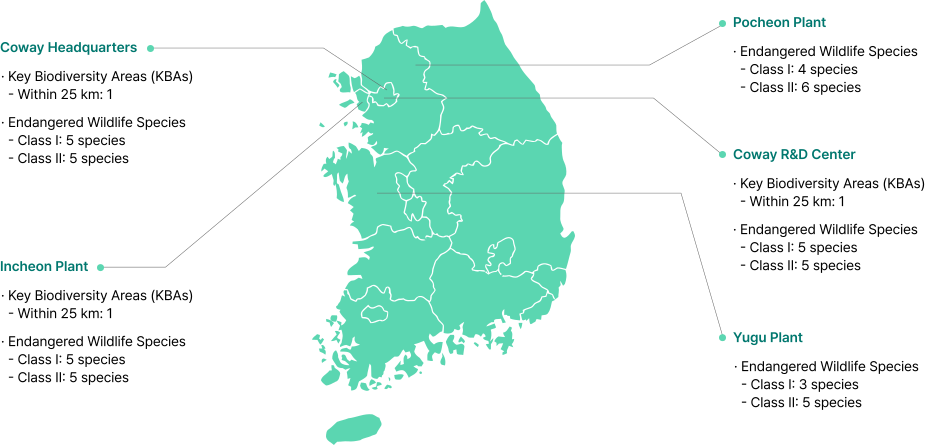
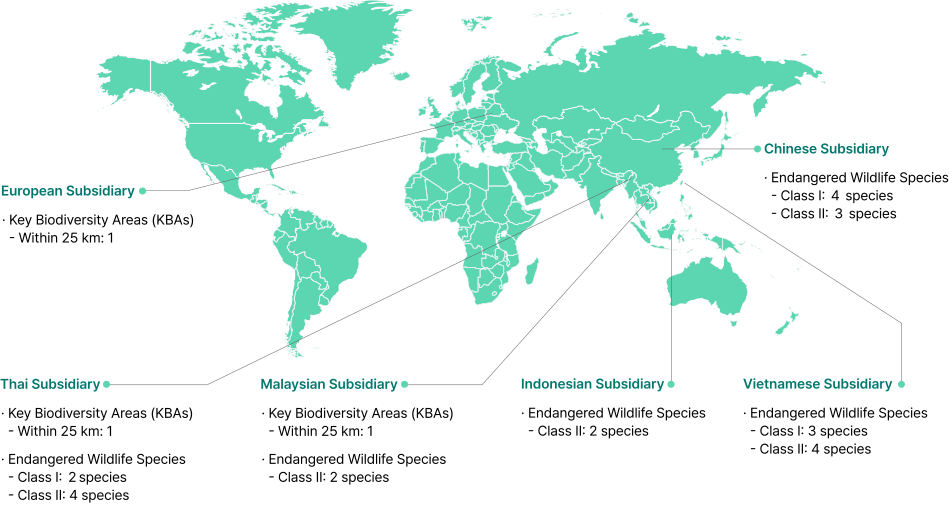
Building on its analysis of ecosystem service dependencies and impacts based on business characteristics, Coway analyzed whether its worksites have touchpoints with nearby nature and sensitive areas. Coway assessed whether Key Biodiversity Areas (KBAs) lie within a 25 km radius of its main domestic worksites and overseas subsidiaries, and tracked the status of endangered wildlife species in those areas. The analysis confirmed KBAs within a 25 km radius of several worksites. Among domestic worksites, these include Coway Headquarters, the Coway R&D Center, and the Incheon Plant. Among overseas subsidiaries, they include the European, Thai, and Malaysian subsidiaries. Coway monitors changes in the ecosystems around its worksites annually and plans to develop tailored risk mitigation plans should any negative changes be identified.
Scope for Identifying Touchpoints with Nature and Sensitive Areas
| Category | Worksites |
|---|---|
| Domestic | Coway R&D Center, Pocheon Plant, Coway Headquarters, Incheon Plant, Yugu Plant |
| Overseas | Malaysia, Indonesia, Thailand, China, Europe, USA, and Vietnam subsidiaries |
Results of Identifying Touchpoints with Nature and Sensitive Areas
Domestic
Overseas
Biodiversity Conservation and Restoration of Natural Ecosystems
Coway conducts "Identification of Touchpoints with Nature and Sensitive Areas" assessments to identify the impact of its business activities on natural ecosystems and to systematically conserve natural capital. Coway screened biodiversity-sensitive areas at and around its business sites. These areas include protected areas, major water systems, and urban areas requiring ecosystem restoration. Through this screening, Coway identified Key Biodiversity Areas (KBAs) within a 25 km radius of its major domestic sites, including the headquarters, the R&D Center, and the Incheon Plant. Based on these findings, Coway designated two types of priority areas for management: nearby major urban water systems, such as Anyangcheon Stream, and urban areas with significant ecosystem fragmentation. Coway is now identifying and carrying out connected ecosystem conservation programs, as outlined below, to deliver tangible Nature Positive outcomes.
Process for Identifying and Responding to Natural Capital Interfaces
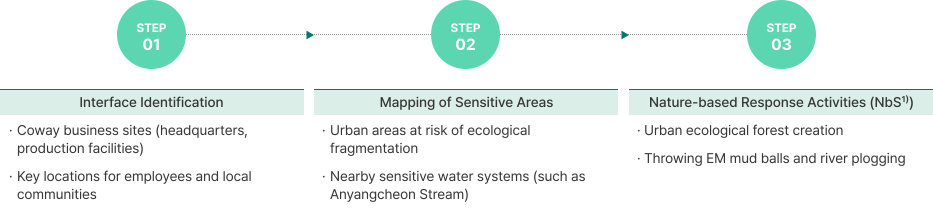
1) Nature-based Solutions: An approach that addresses climate and environmental challenges through the conservation and restoration of ecosystems rather than artificial engineering technologies. [Source: UNEP, IUCN]
Creation of Ecological Forests
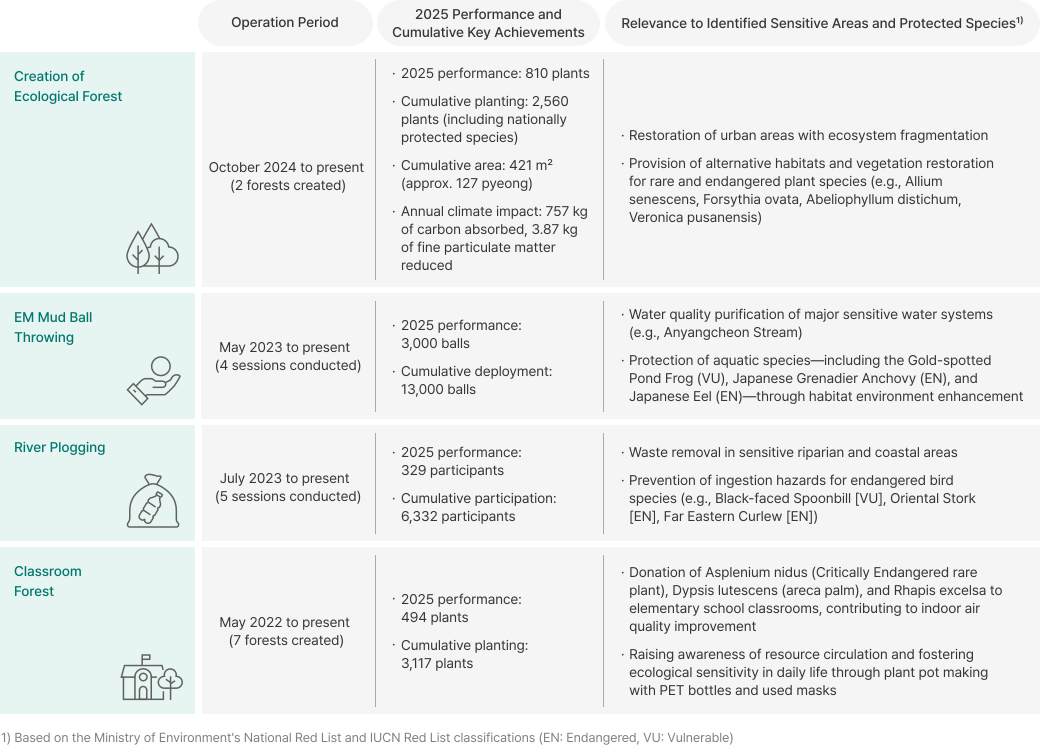
To restore connectivity between adjacent urban development sites and green corridors while securing carbon sinks, we are carrying out an urban ecological forest initiative. Following the 100㎡ ecological forest at Coway's headquarters in 2024, we added a 321㎡ ecological forest at Seoul Banghwa Elementary School in 2025, achieving a cumulative ecological area of 421㎡ (approximately 127 pyeong).
| Category | Key Achievements and Relevance |
|---|---|
| Air quality improvement and climate effects |
Designed with a multi-layered structure centered on herbaceous plants and shrubs, the Coway Ecological Forest actively contributes to climate change response. The forest absorbs a total of 757 kg¹⁾ of carbon annually and reduces approximately 3.87 kg²⁾ of fine particulate matter per year, helping to improve urban air quality and build cleaner ecosystems. |
| Securing alternative habitats for rare and endangered plants | Over the past two years, we have planted endangered and rare species designated by the International Union for Conservation of Nature (IUCN) and the Korea Forest Service, including Allium senescens, Forsythia ovata, Abeliophyllum distichum, and Veronica pusanensis, conserving a cumulative total of 2,560 plants. |
1) Carbon absorption: Calculated based on per-unit-area (m²) carbon absorption coefficients for ground cover plants and garden plants. (Coway HQ: 180 kg/year + Banghwa Elementary School: 577 kg/year = 757 kg/year in total) [Source: Based on the Rural Development Administration's "Study on Carbon Absorption of Garden Ground Cover Plants (2021)"]
2) Fine particulate matter reduction: Calculated based on the standard absorption coefficient (92 kg/ha) for multi-layered structures designed to maximize fine particulate matter reduction. (0.0421 ha x 92 kg = 3.87 kg) [Source: Based on the report "Fine Particulate Matter Reduction Functions of Urban Forests" by the Korea Forest Service and the National Institute of Forest Science]
2) Fine particulate matter reduction: Calculated based on the standard absorption coefficient (92 kg/ha) for multi-layered structures designed to maximize fine particulate matter reduction. (0.0421 ha x 92 kg = 3.87 kg) [Source: Based on the report "Fine Particulate Matter Reduction Functions of Urban Forests" by the Korea Forest Service and the National Institute of Forest Science]
Throwing EM Mud Balls and River Plogging
To protect aquatic organisms sensitive to water pollution and wild birds that depend on the waterside as their habitat in identified sensitive water systems (such as Anyangcheon Stream), we continue to carry out clean-up activities engaging both employees and local communities.
| Category | Key Achievements and Relevance¹⁾ |
|---|---|
| Protecting fish and amphibians through aquatic ecosystem restoration | Since 2023, we have carried out four rounds of activities, deploying a cumulative 13,000 EM (Effective Microorganisms) mud balls into ecologically sensitive rivers to decompose organic matter at estuaries and enhance water quality. Provides a clean refuge for the Gold-spotted pond frog (Pelophylax chosenicus, VU), a threatened amphibian native to nearby rivers. Also establishes a healthy freshwater habitat for the Japanese grenadier anchovy (Coilia nasus, EN) and the Japanese eel (Anguilla japonica, EN), allowing these coastal and estuarine species to live and migrate safely. |
| Securing alternative habitats for rare and endangered plants | Through five river plogging events involving a cumulative total of 6,332 employees and citizens, we collected waste plastics and litter along riverbanks. The removal of waterside waste helps prevent ingestion accidents among many endangered birds visiting nearby coastal areas and wetlands, including the Black-faced Spoonbill (Platalea minor, VU), the Oriental Stork (Ciconia boyciana, EN), and the Far Eastern Curlew (Numenius madagascariensis, EN), and provides them with clean resting areas. |
1) Based on the Ministry of Environment's National Red List and IUCN Red List classifications (EN: Endangered, VU: Vulnerable)
Coway Classroom Forest
Since 2022, Coway has been running the "Coway Classroom Forest" program, donating a cumulative total of 3,117 air-purifying plants to seven elementary schools and providing eco-friendly education.
The program delivers plants with strong air-purifying functions, such as Asplenium nidus¹⁾, Dypsis lutescens (areca palm), and Rhapisexcelsa, to elementary school classrooms in urban areas, creating green spaces inside classrooms. These plants help improve indoor air quality and create a more pleasant learning environment.
In particular, the program also features upcycling activities in which students make plant pots using materials such as recycled PET bottles and discarded mask fabric, allowing them to directly experience the values of resource circulation and environmental protection. Through tailored environmental education, students grow companion plants in their classrooms, learn their value firsthand, and naturally come to understand the importance of biodiversity conservation and climate change response in everyday life.
1) A nationally designated rare native plant in the Critically Endangered category
Biodiversity Conservation Activities
Hazardous Substances
Hazardous Substance Management Framework
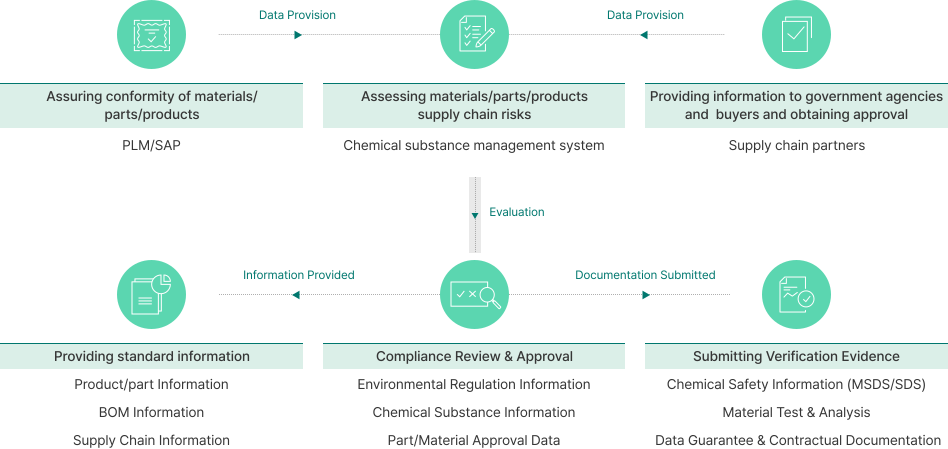
To strengthen the management of hazardous substance in its products and to prevent associated risks, Coway has built and operates a Chemical Substance Management System based on its Environmental Management System. Through this system, Coway manages information on a product, component, and material level in a database.
All products currently manufactured by Coway are managed in accordance with the Coway Chemical Management Guideline, which applies regulatory standards classified into Class I (prohibited substances), Class II (restricted substances), and Class III (voluntarily banned substances). This approach proactively blocks risks associated with hazardous substances and provides a foundation for preventing regulatory violations and securing customer safety.
Since 2024, Coway has applied its own internal risk criteria to incoming components and conducts inspections proactively, performing detailed analyses where necessary to verify the presence of hazardous substances. Coway strictly complies with domestic and overseas chemical regulations and continues to ensure chemical safety and minimize risk not only for environmental home appliances but across its entire range of home appliance products.
Hazardous Substance Management Framework
Hazardous Substance Regulation Monitoring
To proactively address hazardous substance risks and respond to regulatory changes, Coway has introduced an Environmental Regulation Information Management System (ERIMS) to continuously track global environmental regulation trends. Issues requiring regulatory response are reviewed company-wide and managed in an integrated manner, covering the entire process from verifying conformity during product and component development to follow-up management. Coway continues to comply with a wide range of environmental regulations covering hazardous substances, chemical substances, and recycling, while continuously raising the level of management to support the development of safe and eco-friendly products.
Hazardous Chemical Substance Management Performance
2022
- Strengthened company-wide regulatory response capability through the IT system for proactive monitoring of chemical regulations
- Improved management efficiency and streamlined regulatory response through the implementation of a chemical substance management system
2023
- Advanced the Application Life Cycle (ALC) for the proactive chemical regulation monitoring framework/IT operations
- Standardized and improved the chemical substance follow-up management process
2024
- Expanded the scope/countries for proactive regulatory monitoring of chemical substances and strengthened the corporate collaboration system
- Enhanced execution capacity of the chemical substance follow-up management system
2025
- Expanding the scope of chemical substance management to non-electrical and electronic products (radiation, TVOC, safety, etc.)
- Strengthening regulatory response execution (including the development of a phased plan for refrigerant transition)
Hazardous Substance Reduction Activities
BFR & PVC FREE
Coway identifies products and components that may contain certain hazardous substances and conducts preliminary screening using ED-XRF equipment to determine whether such substances are present. In 2025, Coway is screening for the presence of BFR¹⁾ and PVC²⁾. Where bromine (Br) is detected in the preliminary screening, an external testing agency confirms BFR content through Combustion IC testing. Coway verifies materials suspected of containing PVC through FT-IR³⁾ analysis. Coway intends to continue expanding the scope of its monitoring and analysis activities to further strengthen the environmental safety of its products.
1) BFR: Brominated Flame Retardants
2) PVC: Polyvinyl Chloride
3) FT-IR: Fourier Transform Infrared Spectroscopy
2) PVC: Polyvinyl Chloride
3) FT-IR: Fourier Transform Infrared Spectroscopy
PFAS Reduction Activities
To proactively address the tightening of global regulations and to safeguard the environmental safety of its products, Coway is pursuing a transition to PFAS¹⁾-Free by 2030, supported by company-wide governance. Coway operates a Cross-Functional Team (CFT) under the ESG Council to address PFAS risks. Through this team, Coway builds a shared understanding of regulatory trends and identifies PFAS at the component and process levels. Coway also compiles supporting data and proactively addresses mandatory reporting obligations imposed by U.S. federal and state authorities. Coway also reinforces supply chain oversight by delivering specialized training to all partners and obtaining PFAS usage surveys and non-use guarantees. Coway is reviewing a chemical substance history management and real-time monitoring system, based on an integrated database linked with SAP and PLM.
1) PFAS: Per- and polyfluoroalkyl substances
Mid- to Long-term Reduction and Substitution Roadmap
