- Human Rights Management Governance
- Human Rights Management Strategy
- Human Rights Management Risk Management
- Human Rights Management Activities
Human Rights Management
Human Rights Management Governance
Human Rights Management Organization
Coway discusses key matters related to human rights management and makes related decisions through the ESG Committee and the ESG Council. The ESG Committee includes the highest decision-makers, while the ESG Council comprises decision-makers and working-level personnel from key departments. The Committee periodically reports on and deliberates the enactment and revision of human rights management policies, as well as related status and plans. The day-to-day operation of human rights management is jointly led by the HR Team and the ESG Team, which oversee the establishment and execution of the Human Rights Impact Assessment (HRIA) framework, the formulation of corrective action plans, and implementation monitoring. Internal discussions for submitting agenda items to the Committee are conducted through a working-level council, with mandatory participation from HR, Labor Relations, Ethical Management, and Legal Affairs personnel.
Human Rights Management Policy
Coway's human rights management policy is established based on the principles and standards of the Universal Declaration of Human Rights (UDHR), the UN Guiding Principles on Business and Human Rights (UNGPs), and the International Labour Organization (ILO). Its scope is not limited to employees but extends to all stakeholders across the value chain, including customers, partners, and local communities. The policy encompasses core human rights principles, including non-discrimination, the prohibition of child labor and forced labor, compliance with working hours, humane treatment, safety and health, freedom of association, responsible mineral sourcing, consumer safety and health, responsible marketing, personal information protection, and the protection of the human rights of local residents. Coway's commitment to implementing these principles is formalized in this policy.
Human Rights Management Strategy
Human Rights Management Implementation Framework
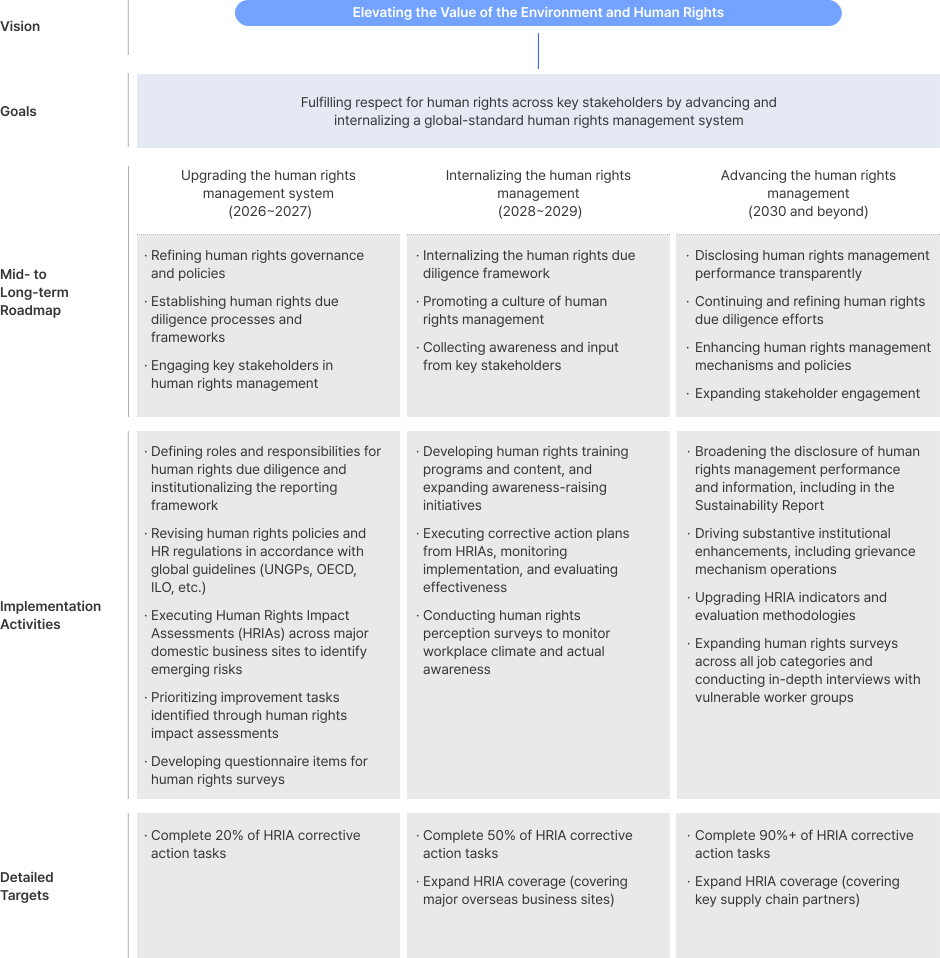
Under the human rights management vision of "Elevating the Value of the Environment and Human Rights," Coway is advancing human rights management with the goal of spreading a culture of human rights respect across all stakeholders and preventing human rights violations. Based on its mid- to long-term roadmap and detailed annual initiatives, Coway is building a global-standard human rights management system to advance respect for human rights.
Strategic Framework for Human Rights Management
Human Rights Risk Management
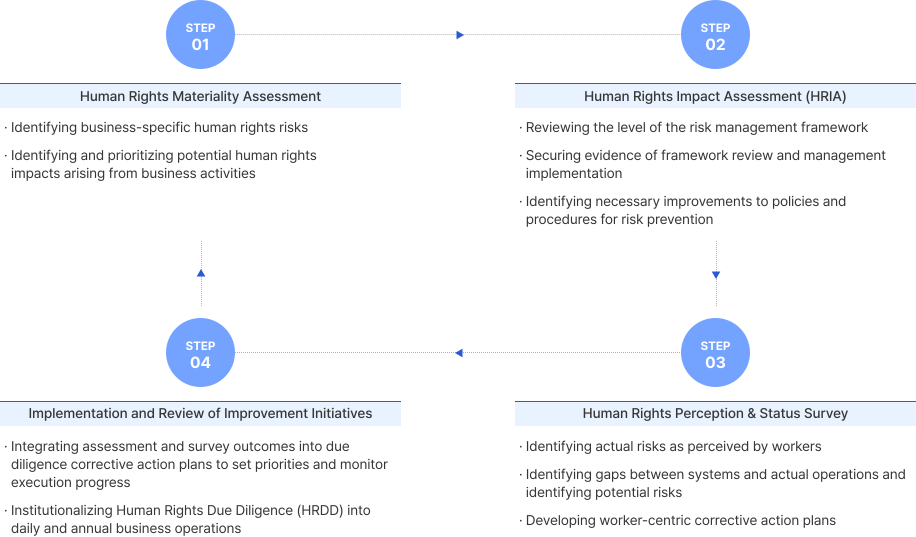
Through the 2025 Human Rights Management System Project, Coway has restructured its operational framework to manage human rights issues more systematically. The process is designed to proactively identify and prioritize human rights risks that may arise across corporate activities, and to review the level of relevant systems and operations to determine areas in need of improvement. Furthermore, it operates as an iterative virtuous cycle that articulates potential risks based on on-site worker perceptions and operational realities, formulates and executes targeted corrective action plans, and continuously monitors implementation progress on an ongoing basis. Through this framework, Coway will preempt human rights risks and further enhance the execution of human rights management across the organization. Coway will transparently disclose its human rights management activities and performance in the Sustainability Report and foster a culture of respect for human rights across Coway through stakeholder engagement.
Human Rights Risk Management Process
Human Rights Impact Assessment
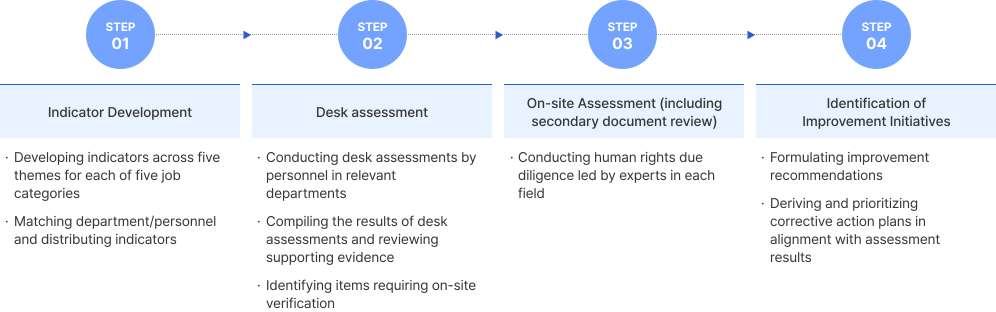
In 2025, Coway advanced its human rights impact assessment framework by establishing a phased process that seamlessly connects every step, from indicator development to the derivation of corrective action plans. Coway first defined five core assessment themes—Human Rights & HR/Labor, Occupational Health & Safety, Ethics, Partners, and Environment—reflecting global standards and key regulatory requirements, including the UNGPs, OECD Guidelines, and the RBA Code of Conduct. Coway also significantly upgraded its assessment indicators compared to 2024 by tailoring them to the distinct characteristics of five key job categories: Office, Production, R&D, Technical Service, and Sales Management. This was designed to identify potential human rights risks stemming from the unique employment and work arrangements of certain job categories in advance, and to build a preventive framework. Based on this, we conducted desk reviews of relevant departments through written assessments, and then reinforced on-site due diligence led by external experts to elevate the level of management and the reliability of supporting evidence. Through this process, we identified key human rights issues and vulnerable stakeholders, derived improvement tasks, and established detailed implementation plans for each. Coway will execute these tasks from short-term and mid- to long-term perspectives based on their materiality and feasibility, and continuously monitor implementation, thereby proactively managing company-wide human rights risks and continually strengthening the effectiveness of its human rights management system.
Human Rights Impact Assessment Process
Human Rights Impact Assessment Results
The 2025 human rights impact assessment confirmed that Coway maintains a sound level of human rights management overall, while identifying potential risks that may arise for certain stakeholders. Accordingly, we have identified key human rights issues for each core stakeholder group, including employees, partners, local communities, and customers, and established short-term and mid- to long-term risk mitigation measures. Coway plans to advance its human rights management through systematic execution.
Key Risks Identified by Stakeholder Group
| Stakeholder | Key Human Rights Issue | Issue Description | Key Mitigation Activities |
|---|---|---|---|
| Employees | Establishing a human rights management system | Need to keep human rights management policies up to date and ensure their effectiveness |
|
| Strengthening ethical management and transparency | Control ethics-related risks such as internal misconduct, and foster a fair and transparent organizational culture |
|
|
| Grievance handling and remediation mechanism | Enhance customized human rights and ethics guidelines tailored to work environments and protect employees' human rights by running effective grievance channels |
|
|
| Partners | Fair contracts and fair trade | Prevent unfair practices that leverage a dominant position and establish a transparent trading order |
|
| Managing supply chain human rights risks | Monitor and manage potential human rights and labor violations across partners and the value chain |
|
|
| Local Communities | Surrounding environment and biodiversity | Ensure the right of local residents near business sites to a pleasant environment, and establish a system to protect local ecosystems and biodiversity |
|
| Customers | Protection of consumer rights and interests | Protect consumer rights and interests by preventing exposure to false or exaggerated information in product and service advertisements |
|
Human Rights Management Activities
Human Rights Management Training
To embed a culture of respect for human rights throughout the organization, Coway conducts annual human rights management training for all employees. In 2025, the "Coway Human Rights Management UP" training was provided to 6,268 employees, with all participants completing courses covering topics including the prevention of sexual harassment in the workplace, the prevention of workplace harassment, awareness improvement on disabilities in the workplace, and personal data protection, achieving a completion rate of 100%.
2025 Human Rights Management Training
| Title | Target Audience | Curriculum Content | Number of Participants | Frequency |
|---|---|---|---|---|
| Coway Human Rights Management UP |
6,268 employees |
|
6,268 (Completion rate: 100%) |
Annually |
Human Rights Grievance Handling Mechanism
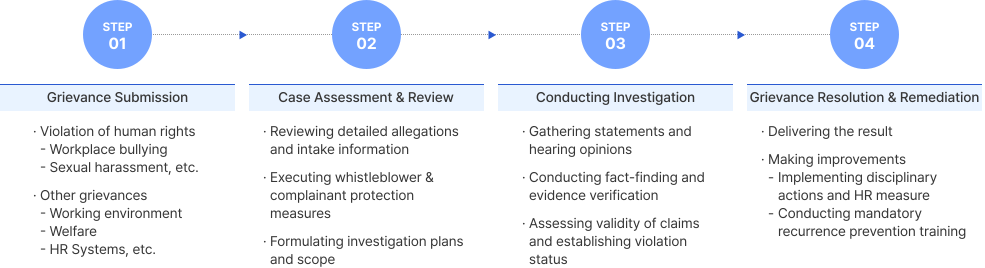
To ensure that employees can immediately voice their concerns when human rights violations or grievances arise, Coway has opened multiple reporting channels, including its groupware, messenger, and business apps. Received cases are managed by category, distinguishing between human rights violations such as workplace harassment, sexual harassment, and discrimination, and general grievances related to working conditions, employee benefits, and HR systems. Coway strictly enforces a principle of resolving cases within 10 days under an environment that guarantees absolute confidentiality and whistleblower protection. When objective investigation is required, external expert advisory services are leveraged. Depending on investigation outcomes, Coway executes appropriate measures through the Disciplinary/HR Committee alongside mandatory recurrence prevention training. In 2025, a total of 38 grievances were received, and all cases were fully processed in strict accordance with established procedures.
Grievance Handling Process