- Customer-Centric Management Governance
- Customer-Centric Management Strategy
- Customer Safety
- Customer Satisfaction
- Quality Management
Customer-Centric Management
Customer-Centric Management Governance
Customer-Centric Management Implementation Organization
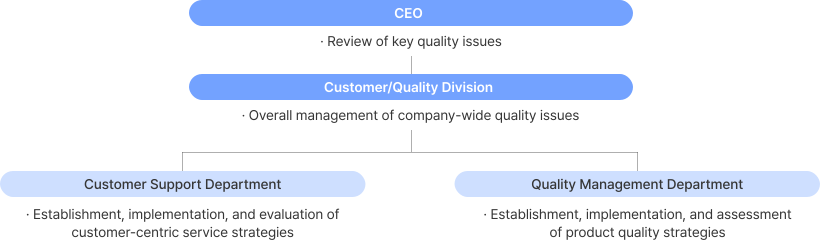
Coway places customer value at the heart of its operations. To deliver on this systematically, it has established a dedicated organization, the Customer/Quality Division. Centered on this division, Coway dedicates significant efforts to developing forward-looking strategies, innovative designs, and high-quality products. Key quality issues are shared each month through executive meetings that include the CEO. The matters discussed are then reflected in company-wide processes. This ensures the prompt resolution of quality concerns.
Organizational Chart for Customer-Centric Management
Customer Protection Policy
Coway continues to elevate its brand value on the foundation of trust built with customers. We place the highest priority on customer feedback and uphold customer satisfaction as a core management principle, reflecting it in every decision and business activity. Based on this approach, we deliver the highest-quality products and services and respond swiftly to customer needs.
In particular, Coway proactively identifies and addresses sources of inconvenience at customer touchpoints to build a trusted customer experience. We provide detailed compensation standards for different types of consumer harm on the Coway.com website, broken down by environmental home appliances and mattress product lines, allowing customers to review compensation details in advance for various situations that may arise during product purchase or rental use.
Coway is committed to enhancing the transparency of information so that customers can make reasonable choices among optimal products and services, and to eliminating deceptive labeling and misleading advertising practices. In 2025, we established the "Ethical Marketing and Advertising Policy" with the approval of the ESG Committee, ensuring that accurate information is provided to customers.
Customer-Centric Management Strategy
Mid- to Long-term Customer-Centric Management Goals
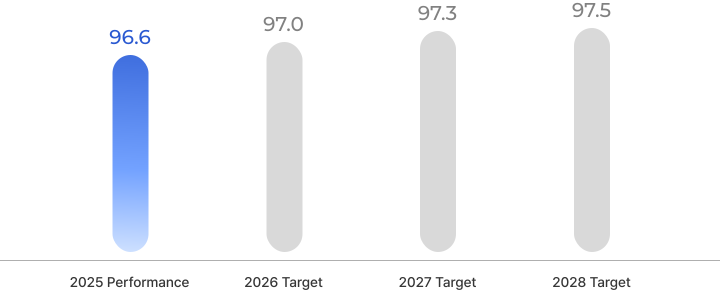
Coway systematically manages the level of consumer rights protection by leveraging objective and externally verifiable indicators such as CCM certification, nationally recognized indices (KCSI, NCSI, etc.), and customer satisfaction scores. Through these quantitative and qualitative indicators, Coway continuously reviews performance from the consumer's perspective, clearly identifies areas for improvement, and reflects them in management activities. On this foundation, Coway is steadily advancing customer-centric management on a mid- to long-term basis, institutionalizing a sustainable, long-term customer-centric management model beyond short-term financial performance.
Coway also surveys and analyzes consumer perceptions of "the eco-friendliness of corporations and products" and reflects the findings in its products and overall management. By analyzing the value of sustainability as perceived by customers through data, and by formulating management strategies grounded in consumer perception rather than the mere production of eco-friendly products, Coway is firmly establishing customer-centric management.
Mid- to Long-term Customer Satisfaction Goals

Mid- to Long-term Quality Management Goals
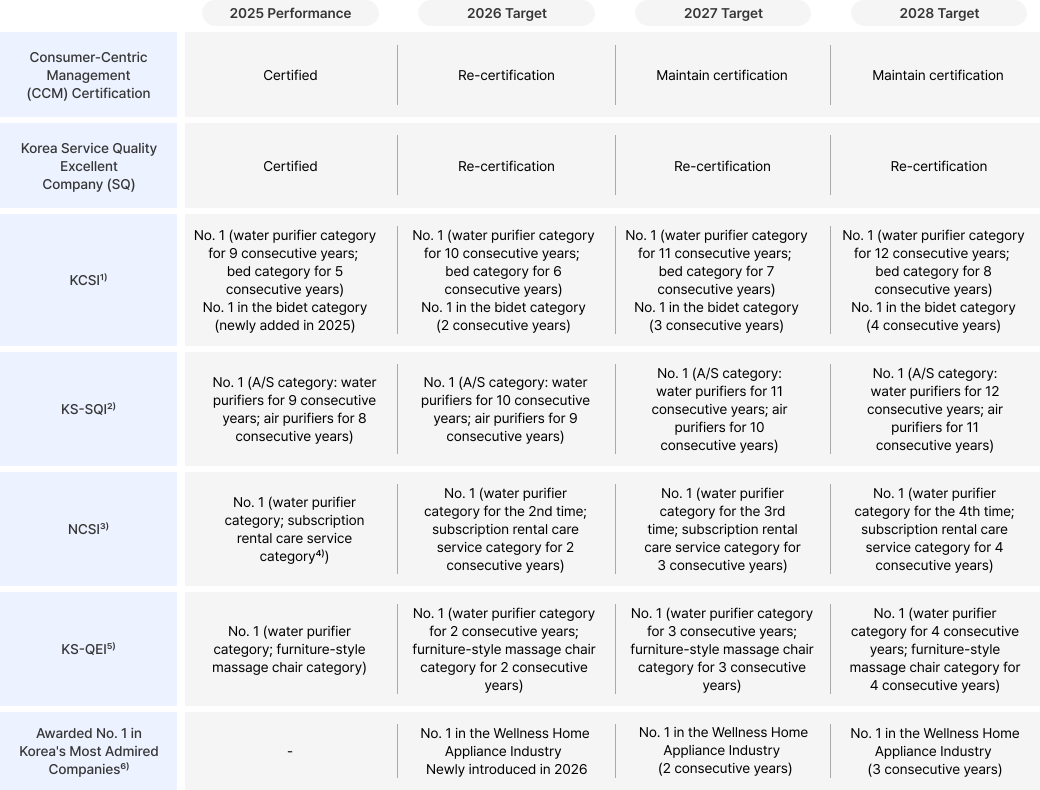
1) KCSI: Korean Customer Satisfaction Index
2) KS-SQI: Korean Standard Service Quality Index
3) NCSI: National Customer Satisfaction Index
4) Subscription-based rental care service category: Survey on manufacturers with rental and product care services
5) KS-QEI: Korean Standard - Quality Excellence Index
6) No. 1 in Korea's Most Admired Companies: Selected as the Most Admired Company across all industries by KMAC (Korea Management Association Consulting)
2) KS-SQI: Korean Standard Service Quality Index
3) NCSI: National Customer Satisfaction Index
4) Subscription-based rental care service category: Survey on manufacturers with rental and product care services
5) KS-QEI: Korean Standard - Quality Excellence Index
6) No. 1 in Korea's Most Admired Companies: Selected as the Most Admired Company across all industries by KMAC (Korea Management Association Consulting)
Customer Safety
Customer Safety Management Across the Product Life Cycle
Safety in the Product Design and Manufacturing Stages
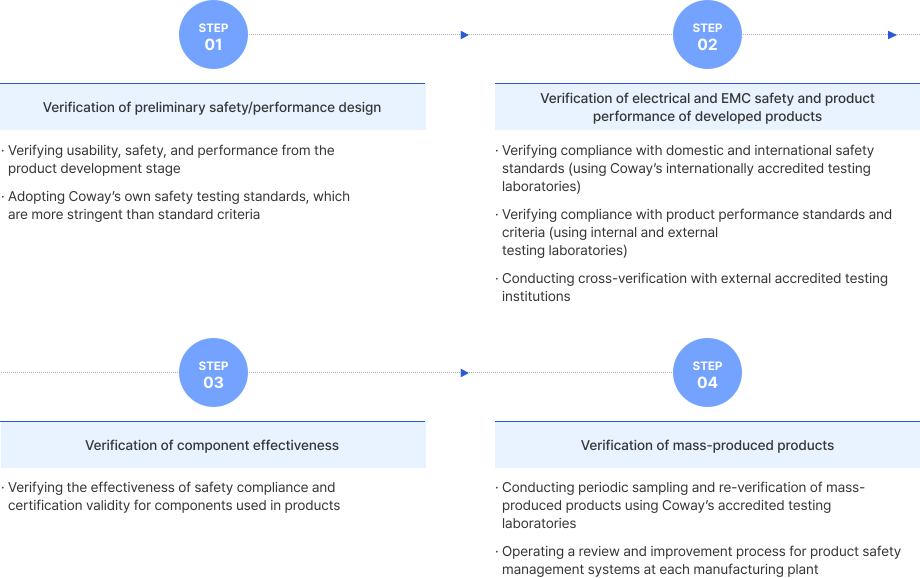
Coway has established a proactive verification process that closely reviews safety and performance from the product design stage. Through this process, Coway sets internal verification standards for electrical safety, electromagnetic compatibility (EMC) regulations, and product performance that exceed legal requirements. Coway also ensures the accuracy and fairness of its test results by cross-verifying and mutually confirming its in-house test outcomes with independent domestic and international accredited testing institutions.
In-house Safety Verification System Process
Safety in the Installation and Use Stages
To ensure the quality and safety of product installation, Coway provides specialized training to its Service Managers for each product. This training covers pre-installation checks, suitable installation environments, and conditions under which installation cannot proceed. Coway strictly adheres to installation guidelines, thoroughly checking key safety items such as the prevention of product damage, the risk of electric shock and fire, and the installation standards for water inlet lines. These efforts prevent potential safety incidents and provide customers with optimized installation services.
After-sales Management and Consumer Communication
Coway operates systematic after-sales (A/S) processes to continuously manage consumer safety even after product use. Coway swiftly identifies safety issues that may arise during use and, when necessary, takes immediate action and makes improvements to minimize consumer harm. To help consumers use products safely, Coway publishes product manuals, including after-sales information, on Coway.com in a clear and easy-to-understand manner, providing essential safety information such as instructions for use and precautions. Coway also shares after-sales guidance through the "Coway Service" YouTube channel.
Coway also offers 24/7 consultation services without time or location constraints through a chatbot on its customer support site. Coway activates smart diagnostics and consumables ordering functions through the IoCare+ app, enabling customers to manage product status on their own and request the services they need promptly. Coway actively listens to customer inquiries and complaints and incorporates them into its safety management and product improvement efforts.
Customer Satisfaction
Customer VOC Management
Customer VOC Management Process
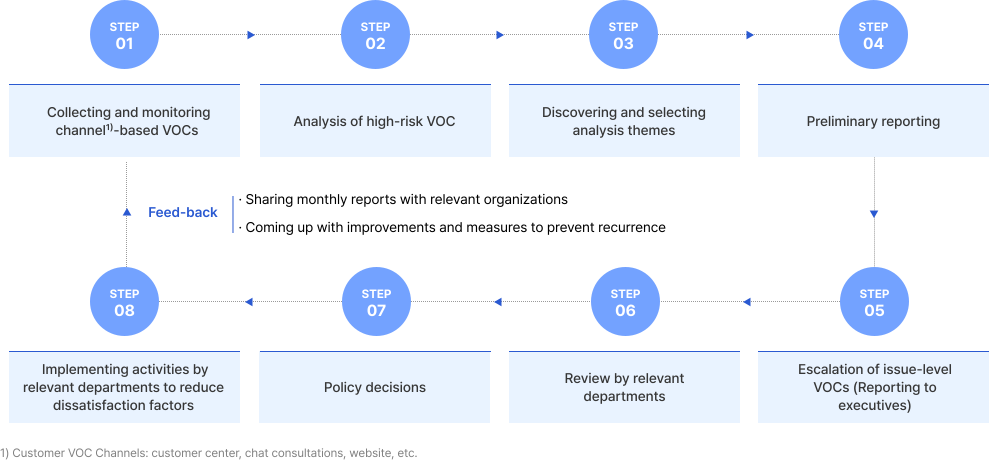
Coway collects VOC (Voice of Customer) through various channels, including the customer center, chat consultations, and the website, and comprehensively manages customer feedback through its systems. The RTV (Real-Time Voice) system is a solution that uses voice recognition technology to convert consultation content into real-time text for analysis, enabling Coway to quickly identify customer inconveniences and apply the insights to improvements.
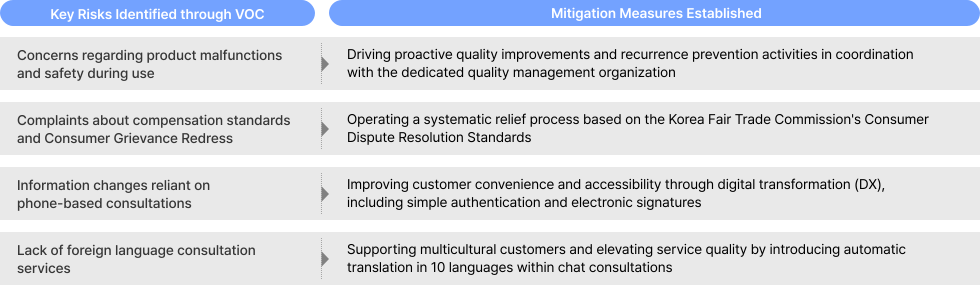
Coway also runs a proactive management framework that detects high-risk VOC in real time and addresses issues before they escalate. Complaints are categorized by detailed items and immediately routed to the relevant departments, which then carry out improvement actions accordingly. VOC items are graded by importance, and matters requiring urgent response are flagged as "Urgent VOC" and reported directly to management. This approach accelerates decision-making and prevents customer complaints in advance, while the digital-based VOC management framework strengthens tailored responses for each customer and enhances satisfaction.
VOC Management Process
Repeat Call Management Process
Coway has established a rapid response system that resolves customer inquiries at the first point of contact, in line with its "One Call" principle. To prevent repeated inquiries arising from the same cause, Coway has implemented a repeat call management system that enhances the First Contact Resolution(FCR) rate, while analyzing instances of two or more contacts on the same issue to proactively address and prevent recurring customer inconvenience. This eliminates the burden on customers of repeatedly explaining their circumstances to different agents while significantly reducing unnecessary wait times.
Coway also runs an intelligent, customized chatbot service based on linked customer information data and a web-based system for changing A/S appointments, enabling customers to access support seamlessly without temporal or spatial constraints. Through this prevention-oriented approach, which addresses issues in advance, and process improvements that eliminate unnecessary steps, Coway steadily reduces customer grievances and continuously elevates overall customer satisfaction.
Repeat Call Management Procedure

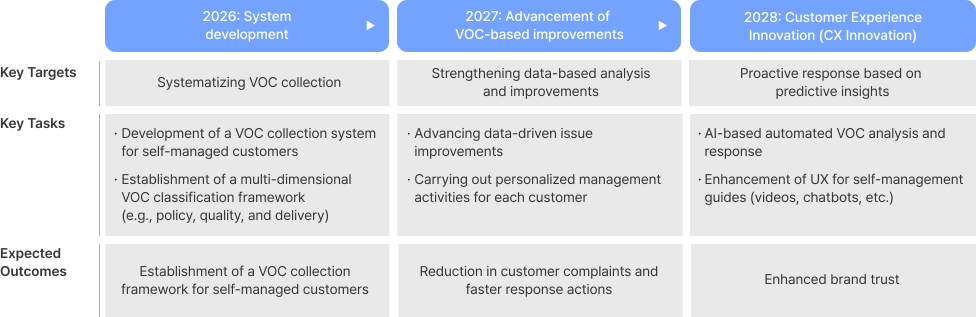
Collection and Analysis of Customer VOC by Type
Coway runs a VOC analysis process to enhance convenience and satisfaction for self-managed customers. Since self-managed customers maintain their products on their own without visits from service experts, it is difficult to promptly identify the Operational Pain Points product use. To address this, Coway collects complaints by type encountered during self-management, analyzes the resulting data, and plans and carries out processes to improve self-management convenience and enhance customer satisfaction over the long term.
Customer Satisfaction Programs
Coway builds customer trust and satisfaction through the products and services delivered at every customer touchpoint, driving mutual growth with its customers. Through relentless innovation, Coway provides differentiated experiences to customers and contributes to enhancing the quality of everyday life. By continuously advancing research on customer satisfaction, Coway tailored life-care solutions across all aspects of daily life and cultivates sustainable relationships that grow with its customers.
Customer Satisfaction Survey
Coway measures customer satisfaction at every major service stage, from ordering, installation, on-site inspection, A/S, to the call center, in order to assess the overall experience and identify opportunities for improvement. The measurement results are delivered immediately to the relevant departments, and areas requiring improvement are quickly addressed through cross-departmental collaboration. Through annual customer satisfaction surveys, Coway continuously monitors its Customer Satisfaction Index (CSAT) and actively reflects the findings in service quality improvement activities.
Customer Satisfaction Survey Process

Customer Satisfaction Survey Results¹⁾
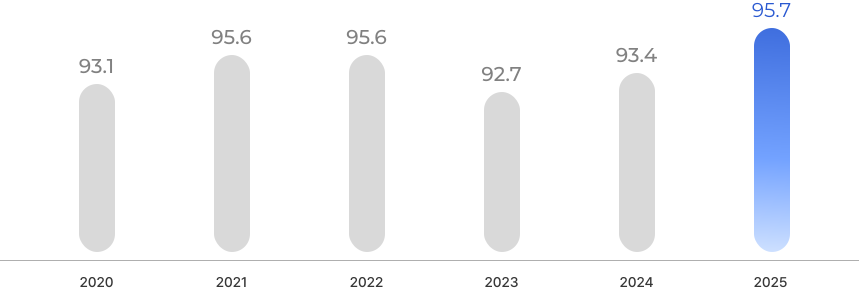
(Unit: points)
1) Based on satisfaction surveys of on-site inspection (Heart Service) for environmental home appliances
1) Based on satisfaction surveys of on-site inspection (Heart Service) for environmental home appliances
CASE
Digital Transformation and Enhanced Accessibility
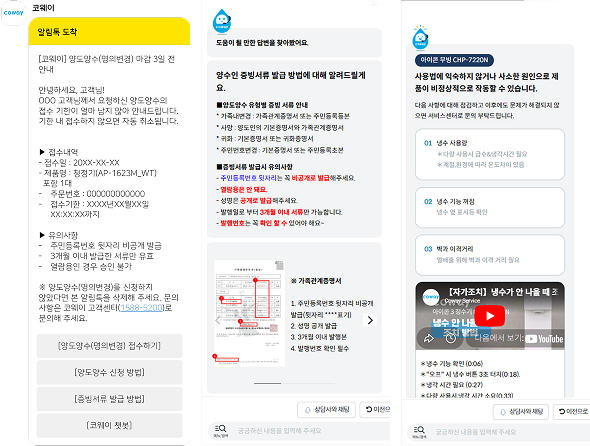
Coway runs a Notification Talk-based scenario-linked service. When a transfer of contract takes place, the Notification Talk sent to the customer includes a direct link to a chatbot scenario that guides them through the required document submission. This allows customers to complete the necessary tasks with a single tap on the Notification Talk, without separately searching for the document preparation process or contacting the customer center for further inquiries.
To minimize customer wait times and elevate the completeness of issue resolution, Coway also provides a 1:1 customized chatbot service powered by integrated customer data and a generative AI self-resolution guide for product issues, delivering a differentiated customer experience.
Notification Talk and Chatbot Guidance for Coway Contract Transfer Applications
Customer Satisfaction Training
Coway provides training programs to strengthen the capabilities of its employees and customer-facing partners, including Cody / Codoc, Homecare Doctors, and Service Managers. For Cody / Codoc and Homecare Doctors, a diverse selection of online training materials is made available, allowing them to choose the courses needed to build their competencies. Service managers, in particular, complete an approximately three-month training program covering product knowledge, hygiene standards, malfunction prevention and diagnosis, customer service attitude, and service philosophy, and are deployed to customer sites only after passing a final assessment.
Supported by this structured framework, total rental accounts and new rental account acquisitions in 2025 expanded by 2.5% and 10.5% year-over-year, respectively, while the Customer Satisfaction Index (CSAT) for the Service Manager organization rose by 0.21 points.
Process for Reflecting Customer Feedback
Coway uses the voice of the customer as the starting point for product development. From the early stages of product planning, Coway identifies customer inconveniences through research and continuously incorporates these insights into product design.
The development of the Icon Water Purifier is a notable example. Initial research showed that customers cited "water splashing" as a major inconvenience, and root-cause analysis revealed that the issue stemmed from the short length of the faucet. While the faucet was lengthened in the Icon 2 to address this, follow-up research found that the splashing problem had not been completely resolved.
Rather than implementing a partial fix, Coway integrated proprietary "Smart Moving Faucet" technology into the Icon 3 to deliver a fundamental, structural solution. This technology automatically aligns the faucet height with the vessel to minimize splashing, embodying cross-generational customer feedback integrated over multiple product iterations.
Product and Service Development Process Based on Customer Feedback

Inclusive Customer Service Improvement Framework
Coway continuously pursues technological innovation and service enhancements to improve product accessibility for customers with disabilities and senior customers. The "Safety Check Service," which has been in place since its introduction in 2017 and continues to be applied in the latest models, is a representative care solution leveraging IoT technology. When water purifier usage is not detected for more than 48 hours, the system automatically sends an alert to family members, enabling preemptive emergency intervention for elderly individuals living alone.
Coway is also strengthening universal design and inclusivity in product development. A voice recognition feature has been introduced for elderly customers and young children who may have difficulty reaching the control panel, and the conventional button-based interface has been replaced with a full-screen LCD display for seniors who are less comfortable operating devices. By adopting a UI centered on intuitive icons and clear text, Coway has enhanced visibility and usability, creating an inclusive product environment that is easy to use even for those less familiar with digital technologies.
CASE
Examples of Product Development Reflecting Customer Feedback
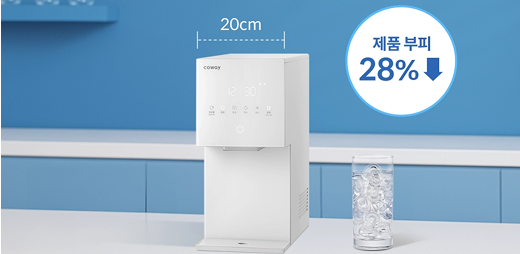
Ultra-Compact Ice Water Purifier
Reflecting housing trends among small households, Coway launched an ultra-compact ice water purifier that combines a slim 20 cm-wide design (28% smaller than previous models) with "Dual Express Ice-Making" technology, which produces ice every 9 minutes and 30 seconds (an 11% improvement in speed). The product simultaneously delivers innovation in space efficiency and user convenience, driving strong customer satisfaction.
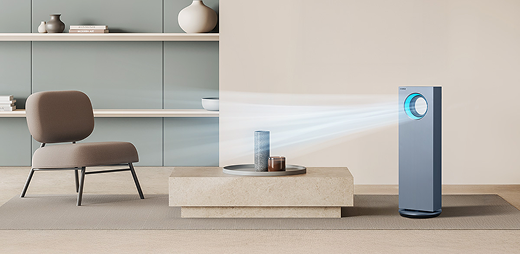
Heative Warm-Air Purifier
Listening to user feedback that the airflow from air purifiers feels cold in winter, Coway launched the "Heative Warm-Air Purifier," which combines a warm-air function with an ultra-slim 13 cm design that maximizes space efficiency, achieving customer-centric product innovation and elevated satisfaction.
Quality Management
Quality Management Systems Certification
Global Quality Management Systems Certification
Coway maintains ISO 9001:2015 certification, the global standard for Quality Management Systems, and runs its quality control framework accordingly. To achieve customer-centric quality standards, we continuously enhance our Quality Management Systems through annual internal audits and third-party certification audits. Coway has also obtained Medical Device GMP¹⁾ compliance approval from the Ministry of Food and Drug Safety for two BEREX product lines—the Massage Set and Core Set (2024)—and the TheraSol product line (2025). Through this, Coway has established and now maintains a medical device quality management system that delivers products with verified performance and safety.
1) GMP: Good Manufacturing Practice, standards for the manufacturing and quality control of medical devices
Operation of the Integrated Certification System
Coway tracks the status of certifications in real time through its "Integrated Certification System," identifying and preventing potential certification-related risks at every stage from product planning to post-launch management. Coway proactively addresses issues before certification problems arise and maintains the reliability of product safety and performance through thorough follow-up inspections and ongoing monitoring.
Integrated Certification System Process
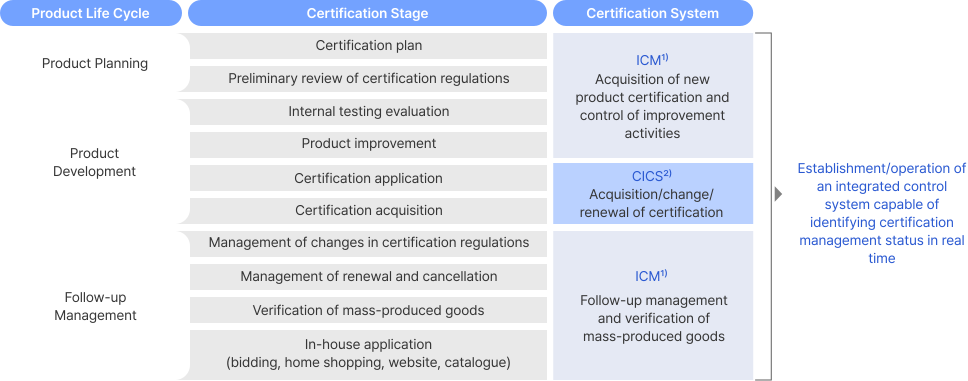
1) ICM: Integrated Certification Management System
2) CICS: Coway Integrated Certification System
2) CICS: Coway Integrated Certification System
Operation and Certification of Internationally Accredited Testing Laboratories
Coway has built a framework that directly verifies product safety and quality based on its nine internationally accredited testing laboratories. Coway holds international testing authority across electrical safety, electromagnetic compatibility (EMC), and performance and energy. This enables in-house self-evaluation for major certifications, including KC certification, the European CE marking, and energy efficiency certification. On the strength of this infrastructure, Coway was newly designated as an accredited testing laboratory for Energy Star and UL (Underwriters Laboratories) in 2024, and through the renewal of its KOLAS national accreditation, Coway has been formally recognized for testing equipment and technical capabilities that meet international standards.
Building on these testing and certification capabilities, in 2025 Coway expanded the scope of its accreditation as an internationally accredited testing institution under ISO/IEC 17025, granted by KOLAS (Korea Laboratory Accreditation Scheme), to cover the energy sector (bidets and electric ranges). This established a foundation for performing energy consumption efficiency tests for these products in-house and strengthened Coway's position as a one-stop safety certification testing laboratory, continuously enhancing product credibility and competitiveness in the global market.
Operation of Coway Accredited Testing Laboratories
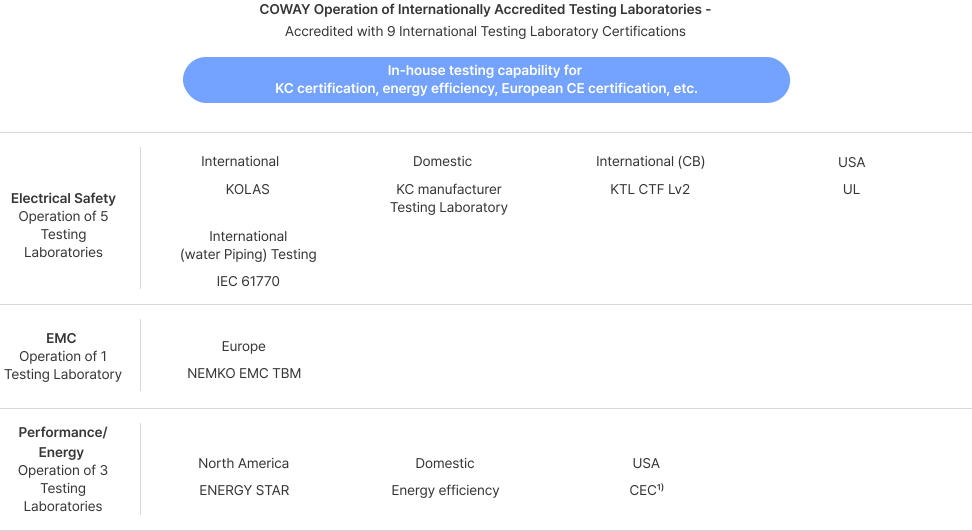
1) CEC : California Energy Commission
Coway Performance of Accredited Testing Laboratories

SSM-based Product Development Management
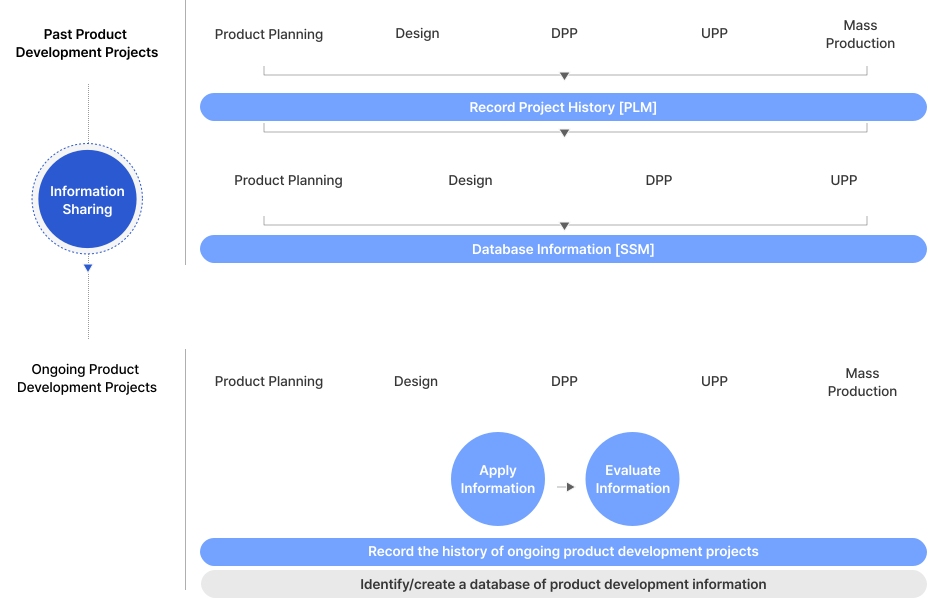
Coway analyzes failure experiences encountered during product development and registers them in the SSM (Stress Strength Method) system, transforming product development information into data and structured knowledge. For products launched in 2025 and those scheduled to launch in the first half of 2026, Coway analyzes failure factors from past development projects and proactively reflects them in the product design stage to strengthen prevention-focused verification activities. By recording and analyzing the entire process from product planning to mass production, Coway compiles development histories into a database and shares and applies them to similar projects, continuously enhancing product quality and development efficiency.
Product Development Process
Quality Management Embedding Programs
To deliver high-quality products and services, Coway operates a range of quality management programs. Coway conducts periodic reliability tests on mass-produced products to proactively diagnose and address durability and performance degradation issues that may occur during the period of use, and has refined its reliability testing methods by analyzing customers' actual usage environments and patterns through its IoT platform. Based on this, Coway proactively verifies and prevents potential quality issues from the initial stage of new product development. In 2025, Coway also held the "Quality VOC Council" 11 times, deriving corrective action plans based on key quality-related customer VOCs collected from the field and reflecting them in the management of products and services.
To address weak points identified through quality diagnostics, Coway has established 26 improvement strategies across eight areas, including design, suppliers, manufacturing, and field, and has designated them as key initiatives of the Quality Control Office for 2026, with goals assigned and execution progress managed.
Quality Management Programs
1) QSN: Quality Solution right Now
Quality Capability Training
To strengthen quality management capabilities and specialized knowledge, Coway conducted a "Quality Job Analysis" and "Quality Competency Assessment" in 2025. Based on the assessment results, Coway has established a systematic quality capability development framework and is currently running it as a practical training program.
The program encompasses foundational and practical competencies and, transcending simple theoretical instruction, focuses on "Project-Based Learning (PBL)" directly tied to tangible operational results.
CASE
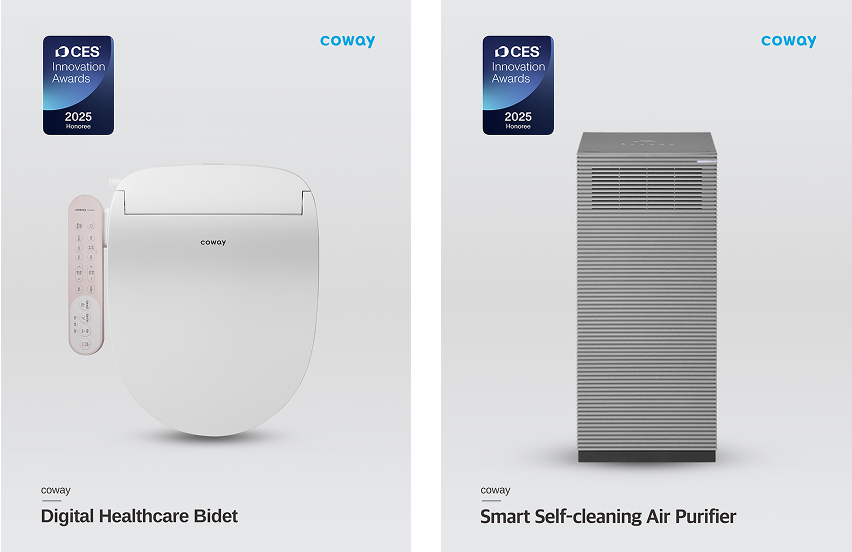

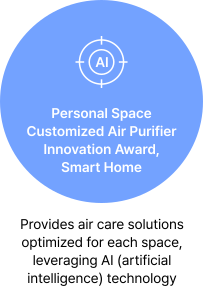
Triple Winner of the CES 2025 Innovation Awards
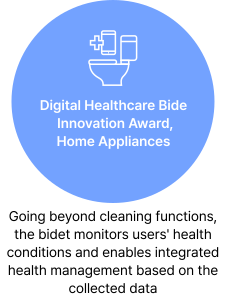
Coway received Innovation Awards in three categories at "CES (Consumer Electronics Show) 2025," the world's largest IT exhibition hosted by the Consumer Technology Association (CTA), demonstrating its technological capabilities and innovation. The award-winning products, the Digital Healthcare Bidet, the Auto Filter Cleaning Air Purifier, and the Personal Space Customized Air Purifier, are concept products that strengthen user convenience and personalized life care solutions, demonstrating Coway's future technology direction and differentiated innovation capabilities. Through user-centered technology development and innovative products, Coway plans to continue leading the smart home and life care markets.
CES 2025 Award-Winning Products