Climate Change Response
Governance
Roles and Responsibilities of the Board of Directors
Coway's Board of Directors serves as the highest decision-making body. It deliberates and resolves on overall sustainability management strategies and policies, including climate change issues. The Board also oversees their execution by management. The Board addresses related matters as key decision-making items, taking into account how the risks and opportunities from climate change affect mid- to long-term business performance.
To carry out this oversight function, Coway has established and runs the ESG Committee under the Board of Directors, composed of three independent directors. The ESG Committee Regulations clearly define the responsibilities and authority of the ESG Committee with respect to key ESG issues, including climate change. The ESG Committee regularly receives reports on strategy development and execution status, centered on key climate-related risks and opportunities. It also holds the authority to review and approve core climate-related initiatives, including GHG reduction targets, resource circulation strategies, and eco-friendly technology development.
In 2025, Coway recalculated its base year for GHG emissions and reduction targets to reflect changes in organizational boundaries. Coway also reviewed progress toward its net zero target. Through this governance framework anchored in the Board of Directors and the ESG Committee, Coway maintains a consistent management and oversight system spanning the development of climate-related strategies through the review of performance.
ESG Committee Meetings held
| Date | Classification | Agenda Items |
|---|---|---|
| May 8, 2025 | Deliberation & Approval | 1. Establishment of ESG policies (supply chain sustainability, biodiversity) |
| 2. Resetting of GHG Emission Reduction Targets and Revision of Base Year | ||
| Report | 3. Reporting on 2025 Double Materiality Assessment results | |
| 4. Reporting on the status of 2025 ESG priority initiatives | ||
| November 6, 2025 | Deliberation & Approval | 1. Establishment of the ethical marketing and advertising policy |
| 2. Establishment of the Corporate Governance Charter |
Roles and Responsibilities of Management
Coway clearly defines management's responsibilities for climate change response, centered on the CEO and the Chair of the ESG Committee. The CEO recognizes climate change as a major management issue affecting Coway's business operations and stakeholders, and regularly receives reports on policy direction and the execution status of core environmental issues, including the implementation of carbon neutrality and the management of climate risks. This ensures that climate-related matters are reflected in company-wide business decisions and strategic planning.
The Chair of the ESG Committee oversees the formulation and execution of the overall ESG strategy and runs the ESG Council to coordinate the execution of key climate-related initiatives. The ESG Council comprises the ESG Team and functional leaders from key operational units. Its members collaboratively deliberate on execution strategies and monitor progress across major climate change response initiatives, including GHG reductions, resource circulation, and eco-friendly technology development.
Serving as the dedicated execution unit, the ESG Team oversees functional working groups spanning Environment, Safety & Certification, Technology Strategy (R&D), and Plant Management. The team manages climate-related data, monitors reduction performance, and reviews the execution of initiatives. Coway also continuously refines how it responds by reflecting regulatory changes and social expectations through collaboration with external experts and stakeholder advisory groups. Grounded in this governance framework, management effectively supports climate-related decision-making by the Board of Directors, maintaining an integrated, consistent management framework across strategy formulation, execution, and monitoring.
ESG Council Climate Change Agenda
| Date | Classification | Agenda Items |
|---|---|---|
| April 16, 2025 | Report | Plan for the Net Zero consulting initiative |
| July 24, 2025 | Interim report on the Net Zero consulting initiative | |
| October 15, 2025 | Reporting on the results of Net Zero scenario analysis | |
| October 15, 2025 | Sharing of the installation plan for Solar Power Plant No. 3 |
Strategy
Risks and Opportunities
Coway recognizes that physical and transition risks from climate change may affect its business operations and financial performance over the short, medium, and long term. On the physical risk side, there is the potential for asset damage and production disruption from extreme weather events such as heavy rainfall and flooding, as well as for higher energy consumption and electricity cost burden due to temperature extremes. Transition risks are anticipated to emerge from shifts in the market and policy environment. Such risks include rising transportation costs and increased operating expenses (OPEX) driven by the expansion of the Emissions Trading Scheme (ETS) and carbon tax. They also include additional costs for hiring and technology investment required to strengthen ESG management.
At the same time, Coway expects to capture new business opportunities in the course of responding to climate change. The transition of electricity sources and improvements in energy efficiency are expected to deliver long-term reductions in energy costs, while expanding the use of eco-friendly energy through measures such as additional solar power facilities can lower reliance on externally purchased electricity. The development of eco-friendly technologies and the strengthening of ESG management are also expected to enhance brand credibility and corporate image, contributing to investor confidence and corporate value enhancement.
Linkage with Strategic Planning Horizons
Coway defines short-, medium-, and long-term time horizons for assessing climate-related risks and opportunities. These time horizons are aligned with the Company's actual decision-making structure. Short-term is defined as up to one year and is applied to annual business planning, budgeting, and the review of short-term execution initiatives. Medium-term covers two to five years and is linked to medium-term business planning, key investment and facility plans, and the review cycle for core strategic initiatives. Long-term is defined as five years or more and is used to comprehensively review mid- to long-term growth strategies, the structural impact of climate change on the business, and long-term risk and opportunity factors. Coway consistently applies these time horizons across its climate strategy, investment decisions, and overall corporate management. This approach ensures that Coway's climate change response extends beyond short-term initiatives. It is systematically embedded in mid- to long-term management strategy.Key Climate-related Risks and Opportunities
| Category | Type | Classification | Content | Potential Financial Impact | Period | ||
|---|---|---|---|---|---|---|---|
| Short-term (≤1 year) |
Medium-term (2-5 years) |
Long-term (5+ years) |
|||||
| Risk | Physical | Acute | Flooding due to heavy rainfall |
|
● | ● | |
| Chronic | Abnormal weather conditions |
|
● | ● | |||
| Transition | Market | Increase in transportation and logistics costs |
|
● | ● | ||
| Policy/Law | Expanding carbon credit purchases and carbon tax imposition |
|
● | ● | ● | ||
| Reputation | Securing personnel to respond to ESG disclosure requirements |
|
● | ● | |||
| Technology | Building in-house renewable energy facilities in response to technological shifts |
|
● | ● | |||
| Opportunity | Transition | Resource Efficiency | Transition to EVs (replacement of mobile combustion sources) and improvement of energy efficiency |
|
● | ● | |
| Market | Reducing dependence on external electricity purchase by expanding renewable (solar) energy generation facilities |
|
● | ● | |||
| Reputation | Anticipation for enhanced brand trust and corporate image through strengthened ESG |
|
● | ||||
Impact on the Business Model and Value Chain
The climate-related risks and opportunities identified by Coway affect the entire business model and value chain, including production and worksite operations, logistics and service delivery, procurement and technology investment, and access to markets and capital.
At the worksite operations stage, including manufacturing facilities and logistics centers, there is the potential for facility damage and operational disruption from extreme weather events such as heavy rain and flooding, while heightened cooling and heating demand from temperature extremes is driving up electricity consumption and energy costs. These factors weigh on operational stability and cost structure in the short term.
At the logistics and service operations stage, rising fuel costs and increasing carbon costs related to the use of mobile combustion sources in transportation are adding to the logistics cost burden. The expansion of the carbon emissions trading scheme and carbon taxes is structurally pushing up the costs of service operations, including delivery, installation, and inspection, and is heightening the need for cost management strategies and operational efficiency improvements over the medium to long term.
In terms of procurement and technology infrastructure, the need to build proprietary renewable energy facilities and transition to EVs is driving costs related to securing specialized personnel and initial facility investment. However, over the medium to long term, this can translate into lower electricity costs and reduced exposure to energy price volatility, contributing to an improved cost structure and greater operational stability.
These climate response efforts are also affecting how value is created and how Coway engages with the market. The introduction of eco-friendly technologies and the expanded use of renewable energy can deliver energy cost savings while improving ESG assessment outcomes, supporting investor confidence and access to capital. Stronger ESG management is also expected to enhance brand credibility and corporate image, reinforcing the foundation for long-term corporate value enhancement and sustainable revenue generation.
- Business Model and Value Chain
- Description
- Affecting Risks and Opportunities
- Production and Worksite Operations
-
- Core business foundation for product manufacturing, storage, and shipping
- Facility damage and operational disruption from heavy rain and flooding
- Higher electricity consumption and energy costs due to temperature extremes
- Logistics and Service Operations
-
- Frequent on-site service activities including product delivery, installation, and inspection
- Service vehicle operations and the use of mobile combustion sources are inherently required
- Higher costs in transportation and logistics
- Procurement and Technology Infrastructure Build-out
-
- Raw material procurement and facility investment underpin product competitiveness and operational stability
- Costs from establishing renewable energy facilities and transitioning to EVs
- Operating cost savings driven by mid- to long-term cost reductions
- Market, Brand, and Capital Access
-
- Influences market and capital access through ESG assessments, brand credibility, and investor perception
- Stronger external credibility and value creation through enhanced reputation
Strategy and Decision-making
Response Plans for Key Risks and Opportunities
| Category | Type | Classification | Description | Direct and indirect climate mitigation and adaptation actions |
|---|---|---|---|---|
| Risk | Physical | Acute | Flooding due to heavy rainfall |
|
| Chronic | Temperature extremes |
|
||
| Transition | Market | Increase in transportation and logistics costs |
|
|
| Policy/Law | Expanding carbon credit purchases and carbon tax imposition |
|
||
| Reputation | Securing personnel to respond to ESG disclosure requirements |
|
||
| Technology | Building in-house renewable energy facilities in response to technological shifts |
|
||
| Opportunity | Transition | Resource Efficiency | Transition to EVs (replacement of mobile combustion sources) and improvement of energy efficiency |
|
| Market | Reducing dependence on external electricity purchase by expanding renewable (solar) energy generation facilities |
|
||
| Reputation | Anticipation for enhanced brand trust and corporate image through strengthened ESG |
|
Key Activity 1. Expanding Renewable Energy
In response to the global push for carbon neutrality, Coway has installed and operates solar power facilities on idle land at its worksites as part of its ESG management.
Small-scale solar power facilities have been built on the rooftops of major worksites, including Yugu Plant (49.5 kWp), Yugu Logistics Center Office Building (48.8 kWp), Incheon Plant (39 kWp), and Pocheon Plant (45 kWp), and the electricity generated is used for self-consumption.
The electricity generated by commercial-scale solar power facilities at the Yugu Logistics Center (993.6 kWp) and at BEREX Tech, a Coway subsidiary (802.35 kWp), totaling approximately 2,124 MWh as of 2025, is sold in full to Korea Electric Power Corporation (KEPCO), with the proceeds used to secure Renewable Energy Certificates (RECs). The RECs obtained were converted into renewable energy use records through the Korea Energy Agency and applied to annual GHG reduction performance.
In 2025, to further expand its renewable energy use, Coway, following ESG Committee approval, completed the No. 003 solar power plant with a capacity of 532 kWp on idle parking lot land at the Yugu Plant. Operated under a self-consumption model, this plant is expected to deliver an additional reduction of approximately 320 tCO₂e in GHG emissions per year.
Coway continues to develop plans to expand its renewable energy use as part of its climate change response. In doing so, it puts its ESG management into practice.
Renewable Energy Use Performance
| Unit of Measurement | 2023 | 2024 | 2025 | |
|---|---|---|---|---|
| Total renewable energy use | MWh | 2,178 | 2,366 | 2,310¹⁾ |
| Retirement of RECs for Renewable Energy Claims²⁾ | MWh | 1,993 | 2,181 | 2,124 |
| Other renewable energy use³⁾ | MWh | 185 | 185 | 186 |
| Renewable energy use record (renewable energy use ratio)⁴⁾ |
% | 2.6 | 2.8 | 2.9 |
1) Slight decrease in renewable energy use due to differences in solar irradiance
2) RECs secured from solar power generation at the Yugu Logistics Center and BEREX Tech, our subsidiary, were converted into renewable energy use records through the Korea Energy Agency RE100 system
3) Small-scale electricity generated and directly used at four worksites (Yugu Plant, Yugu Logistics Center Office Building, Incheon Plant, and Pocheon Plant)
4) Renewable energy use record (renewable energy use ratio) = (Renewable energy use x 3.6) ÷ Total energy x 100
2) RECs secured from solar power generation at the Yugu Logistics Center and BEREX Tech, our subsidiary, were converted into renewable energy use records through the Korea Energy Agency RE100 system
3) Small-scale electricity generated and directly used at four worksites (Yugu Plant, Yugu Logistics Center Office Building, Incheon Plant, and Pocheon Plant)
4) Renewable energy use record (renewable energy use ratio) = (Renewable energy use x 3.6) ÷ Total energy x 100
Key Activity 2. Introduction of High-efficiency Mobility
To reduce GHG emissions from mobile fuel use, Coway is transitioning its business vehicles to high-efficiency mobility solutions. Starting in 2024, technical service managers were provided with leased vehicles with a certified fuel efficiency of 11.6 km/L, significantly higher than the approximately 9.3 km/L of the personal vehicles previously used. This transition has achieved meaningful GHG emissions reductions on an equivalent mileage basis.
As an outcome of high-efficiency mobility adoption, GHG emissions per service decreased by approximately 19.5%, from 2.84 kgCO₂e in 2024 to 2.29 kgCO₂e in 2025, demonstrating that emission intensity was lowered through improved mobility efficiency despite the expansion of services driven by revenue growth. Going forward, Coway plans to phase in the transition of business vehicles to high-efficiency mobility and continue to deliver on its mid- to long-term emissions reduction targets, including reductions in the logistics and service operations stage.
Eco-friendly Vehicle Transition Performance
| Unit of Measurement | 2023 | 2024 | 2025 | |
|---|---|---|---|---|
| High-efficiency mobility transition ratio (cumulative) | % | 27 | 78 | 100 |
| GHG emissions per service | kgCO₂e/service | 2.96 | 2.84 | 2.29 |
Key Activity 3. Transition to Eco-friendly Refrigerants
To reduce the environmental impact of compressor refrigerants with a high Global Warming Potential (GWP), Coway is gradually expanding the transition to eco-friendly refrigerants. Through the broader adoption of eco-friendly refrigerants, Coway will continue to develop products that respond to climate change and lower environmental impact.
Eco-friendly Refrigerant Use Ratio¹⁾
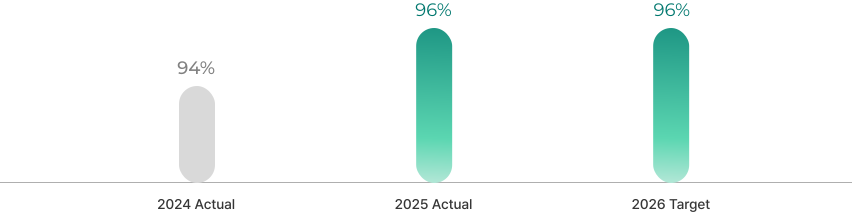
1) Applies to new products scheduled for launch in the corresponding year
Scenario Analysis
Physical Risk Scenario Analysis
Analysis Overview
Physical Risks Analyzed
- Temperature extremes, heavy rainfall and flooding
Analysis Period and Scope
- Period
- 2024 to the 2050s
- Scope
- Temperature extremes: Headquarters, Coway R&D Center, Yugu Plant, Incheon Plant, Pocheon Plant, logistics operations, solar power plants, and service personnel
- Heavy rainfall and flooding: Coway Yugu Plant (136-23, Yugumagoksa-ro, Yugu-eup, Gongju-si,
Chungcheongnam-do)
Scenarios and Sources
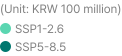
- SSP1-2.6
- A scenario in which GHG reduction policies are effectively implemented and the energy transition accelerates, achieving Net Zero by 2050 and limiting global warming to below 2°C below 2°C by 2100
- SSP5-8.5
- A scenario in which GHG reduction policies are less effective and the energy transition is delayed, representing the most severe climate change impacts, with the temperature rise projected to exceed 4°C
- Scenario Source
- Based on the SSP (Shared Socioeconomic Pathways) scenarios presented in the IPCC Sixth Assessment Report
Scenario Appropriateness
- All scenarios applied are sourced from authoritative bodies, and these scenarios are aligned with the latest international agreements, including the United Nations Framework Convention on Climate Change (UNFCCC) and the Paris Agreement
Key Assumptions and Uncertainties
- Inherent uncertainties exist in climate change pathways under the IPCC scenarios and the resulting analysis outcomes due to the complexity of natural phenomena and the limitations of forecasting. The models used to derive financial impacts also involve simplifications and assumptions, which may result in differences from actual losses.
- For temperature extremes, the analysis used the daily average electricity consumption for summer (June to September) based on total electricity use in 2024, together with the NDC-based retail electricity prices provided by KEPCO Management Research Institute.
- The number of heavy rainfall days is defined as the annual number of days with daily precipitation of 80 mm or more, and the number of heatwave days is defined as the annual number of days with a daily maximum temperature of 33°C or higher.
Analysis Results
Analysis Results for Temperature Extremes
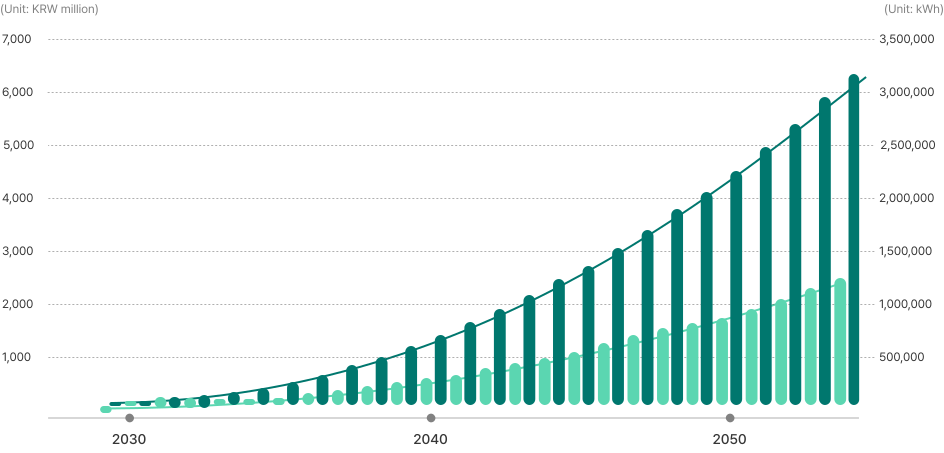
Building on the IPCC Sixth Assessment Report and Korea's national climate change standard scenarios, Coway applied the SSP1-2.6 (low-carbon) and SSP5-8.5 (high-carbon) scenarios to analyze the financial impact of higher energy use driven by temperature extremes. The analysis focused on quantitatively deriving the increase in electricity demand from rising temperatures and the resulting changes in electricity costs by combining trends in the number of summer days with historical electricity consumption data.
In particular, the analysis model was redesigned by drawing on the KEPCO Management Research Institute's outlook in "Power Market Implications of 2050 Carbon Neutrality," reflecting projected increases in the number of summer days and daily average electricity consumption resulting from temperature changes. This enabled a more granular assessment of differences in electricity demand growth and medium- to long-term financial impacts across scenarios.
The results indicate that under both scenarios, the number of summer days is expected to increase as temperatures rise. However, under the SSP5-8.5 scenario, summer is projected to last approximately 12 days longer by 2050 than under the SSP1-2.6 scenario. The number of heatwave days is also projected to increase by up to about 37 days, identifying expanded electricity use driven by higher cooling demand as a key impact factor. Energy demand growth from rising temperatures is expected to start at approximately 1% of total electricity consumption in 2030 and rise to about 5% by 2050.
Cumulative electricity costs were estimated at approximately KRW 2.1 billion under the SSP1-2.6 scenario and up to approximately KRW 6.2 billion under the SSP5-8.5 scenario, indicating a significantly heavier electricity cost burden under the high-carbon scenario. Even under the same extreme temperature risk, the magnitude and intensity of medium- to long-term financial impacts vary clearly depending on the scenario-specific temperature pathway.
Financial Impact by Scenario

Analysis Results for Heavy Rainfall and Flooding
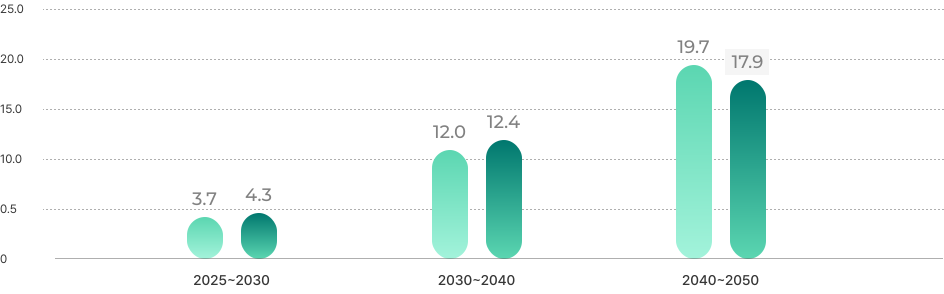
Coway estimated the financial impact by focusing on the potential effect of business interruptions due to heavy rainfall on revenue. From 2021 to 2050, the annual average number of heavy rainfall days is comparable under both the SSP1-2.6 and SSP5-8.5 scenarios at approximately 2.1 days, and projected precipitation differences between the two scenarios were also found to be limited.
Specifically, based on the annual average probability of heavy rainfall and gross profit by period, the estimated revenue loss from heavy rainfall is projected at approximately KRW 0.3 to 0.4 billion from 2025 to 2030, expanding to approximately KRW 1.2 billion to KRW 1.24 billion from 2030 to 2040. From 2040 to 2050, revenue loss is projected to reach approximately KRW 1.79 billion to KRW 1.97 billion.
The Korea Meteorological Administration has also indicated that under the high-emission scenario, the intensity of extreme precipitation with a 100-year return period is expected to increase, potentially raising the likelihood of flooding. Considering the possibility that the impact of heavy rain and extreme precipitation on revenue may grow in the future, Coway will continue to monitor changes in related regulations and policies, as well as societal and administrative response trends.
Financial Impact by Scenario
Scenario Analysis
Transition Risk and Opportunity Scenario Analysis
Analysis Overview
Transition Risks and Opportunities Analyzed
- Risks
- Market Risk: Carbon emissions from the use of vehicles for service delivery
- Regulatory Risk: Higher costs from rising emission allowance prices
- Reputational Risk: Decline in brand credibility due to insufficient low-carbon management
- Technology Risk: Higher costs from investments to transition facilities to low-carbon operations
- Opportunities
- Resource Efficiency: Maintenance cost savings from transitioning headquarters, plant, and business vehicles to EVs
- Market: Electricity cost savings from the transition to renewable energy (solar power generation)
- Reputation: Higher market trust and corporate value enhancement through the maintenance of strong ESG ratings
Analysis Period
- Period
- 2024 to the 2050s
Scenarios and Sources
- NGFS Below 2°C and Net Zero 2050 Scenarios
- Climate scenarios proposed by the Network for Greening the Financial System (NGFS) under the Financial Stability Board
- Net Zero 2050: Assumes the achievement of net zero global CO₂ emissions by 2050 by limiting global warming to 1.5°C through stringent climate policies and innovation
- Below 2°C: Assumes a gradual tightening of climate policies, limiting global warming to below 2°C
- IEA NZE (Net Zero Emissions by 2050) Scenario
- A scenario provided by the International Energy Agency (IEA)
- Assumes a pathway to achieve net zero carbon emissions in the global energy sector by 2050
Scenario Appropriateness
- All scenarios applied are sourced from authoritative bodies and align with the latest international agreements, including the UNFCCC and the Paris Agreement
Key Assumptions and Uncertainties
- The scenarios used depend on country-specific policies and market structures, so uncertainty exists with regard to socioeconomic changes within each country. Models used to estimate financial impacts also involve simplifications and assumptions, which may result in differences from actual outcomes.
Transition Risk Analysis Results
Coway categorizes climate-related transition risks into four areas, namely market, regulatory, technology, and reputation, and quantitatively analyzes the financial impact of each risk on the business. By reflecting NGFS scenarios and projections for domestic and overseas carbon regulations, Coway estimates costs associated with vehicle operations, emission allowance purchases, low-carbon facility investments, and a decline in ESG image, and subsequently calculates the financial impact by risk type.
Building on these analyses, Coway has established voluntary GHG reduction targets and is continuously strengthening its carbon reduction foundation through the broader introduction of eco-friendly vehicles and the expansion of solar power facilities. Coway is also enhancing its GHG and carbon cost management framework to proactively address the regulatory environment that is expected to tighten further, including the emissions trading scheme.
| Risk Type | Risk Factor | Estimated Financial Impact | Basis |
|---|---|---|---|
| Market | Carbon emissions from the use of vehicles to provide services | KRW 0.361~0.645 billion | Estimating annual regulatory costs by calculating carbon prices for each NGFS scenario based on annual emissions from vehicle operations (including vehicle costs, fuel costs, and average managerial labor costs) |
| Regulation | Cost increases due to rising carbon credit prices | KRW 5.715~7.443 billion | Assuming changes in the free allocation rates from 2024 to 2050, estimating annual costs by applying NGFS scenario-based carbon prices to the difference between projected yearly emissions and allocation amounts (including average labor costs of personnel responsible for emission allowance and emissions trading scheme management) |
| Reputation | Decline in brand credibility due to insufficient low-carbon management | KRW 51.667 billion | Reflecting the possibility of disadvantages in market evaluation such as reduced stock returns and expanded PER due to ESG rating downgrade (including average labor costs of managers handling disclosures) |
| Technology | Cost increases from investments in low-carbon facility transitions | KRW 2.149~3.868 billion | Estimating investment costs reflecting annual power generation, installed capacity, and unit facility costs (LCOE) based on a scenario of expanding solar power facilities to achieve Net zero |
Opportunity Analysis Results
Coway views climate change not merely as a risk factor but as a new growth opportunity, identifying transition opportunities across multiple areas, including resource efficiency improvements, the transition to renewable energy, and ESG-based trust enhancement. By transitioning internal combustion engine vehicles to EVs, Coway is generating savings in operating and maintenance costs, and has analyzed the mid- to long-term energy cost savings expected from the expansion of renewable energy by reflecting electricity price outlooks under the NGFS and Net Zero scenarios.
Coway is also advancing the enhancement of its ESG management practices to consistently maintain a strong ESG rating, secure positive market valuations, and translate this into corporate value enhancement. Through these efforts, Coway is building a foundation for stronger competitiveness and sustainable growth over the mid to long term, going beyond climate change response.
| Opportunity Type | Opportunity Factor | Financial Impact Estimate | Basis |
|---|---|---|---|
| Resource Efficiency | Vehicle maintenance cost savings through EV transition for headquarters, plants, and service manager vehicles | KRW 0.404 billion | Reflecting the cost savings from reduced fuel expenses and maintenance costs associated with transitioning from internal combustion engine vehicles to EVs (estimating costs that can be saved such as vehicle mileage, annual fuel price increase rates, and EV fuel efficiency) |
| Market | Electricity cost reduction through renewable energy transition (solar power generation) | KRW 9.516~12.020 billion | Calculated cumulative cost savings from the energy transition by setting renewable energy use targets of 50% by 2033 and 100% by 2050, and applying scenario-specific electricity unit prices to annual electricity consumption |
| Reputation | Enhanced market trust and increased corporate value by maintaining and improving excellent ESG ratings | KRW 8.073 billion | Reflecting the positive effects on market evaluation factors such as increased stock returns and expanded PER following an improvement in ESG ratings (enhancing corporate value) |
Resilience Assessment
Coway's material physical risks are temperature extremes and heavy rainfall and flooding, and it is systematically pursuing preventive measures to minimize worksite damage and operational disruption. To address flooding risks, Coway regularly inspects and maintains leak-prone areas such as rooftops, exterior walls, and windows, alongside physical disaster prevention measures like the routine upkeep of culverts and manholes. To mitigate risks from temperature extremes, Coway is gradually replacing aging heating and cooling equipment, reinforcing maintenance, and adjusting working hours during heatwaves and cold spells to protect workers and prevent productivity losses. Through these efforts, Coway proactively manages the impact of extreme weather on its operations and financial performance.
By systematically identifying and quantitatively analyzing transition risks and opportunities and linking the results to its management strategy, Coway is strengthening its resilience against climate uncertainty. Based on financial impact analyses reflecting the NGFS and Net Zero scenarios and regulatory outlooks, Coway is taking proactive actions—setting GHG reduction targets, expanding eco-friendly vehicles, and scaling up renewable energy and solar power facilities—to ease the financial impact of transition risks while stabilizing its cost structure. By further upgrading its management framework for future regulations such as the emissions trading scheme and strengthening ESG management, Coway is building a foundation to sustain market trust and capture the cost-saving and value-enhancing opportunities arising from its climate transition. This framework cushions transition shocks while supporting Coway's resilience for sustainable growth and long-term competitiveness.
Risk Management
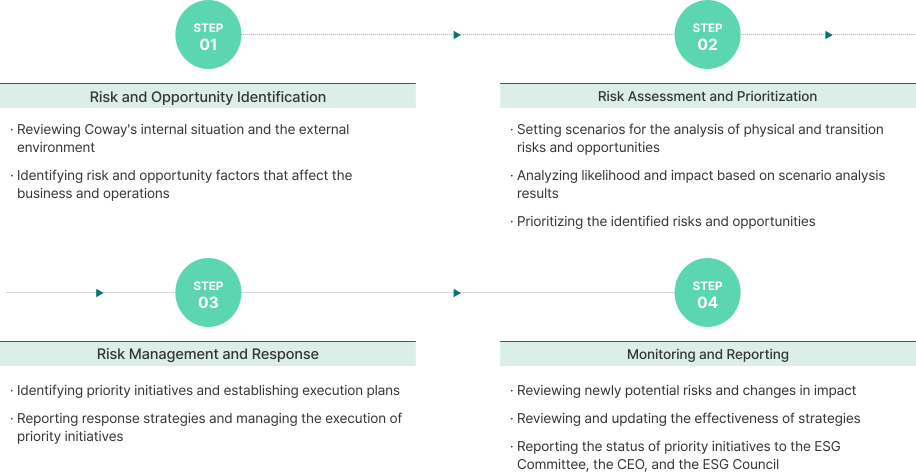
Coway runs a risk management process that includes identification, analysis, response, and monitoring stages to systematically address the risks and opportunities arising from climate change. Through this process, Coway assesses the impact of climate-related issues, prioritizes them, and establishes and executes key management initiatives. This enables Coway to proactively respond to a changing business environment.
Climate Change Risks and Opportunities Management Process
Metrics and Targets
Net zero Roadmap
To achieve its 2050 Net zero target, Coway is systematically executing a phased roadmap encompassing the deployment of renewable energy infrastructure, the transition to eco-friendly corporate vehicles, and the adoption of high-efficiency equipment.
Following a change in its organizational boundary driven by the transition of service managers to full-time status, Coway recalculated its base year and Scope 1 and Scope 2 GHG emissions reduction targets in 2025. Consequently, Coway re-established its reduction targets to achieve a 50% reduction by 2033 and 100% Net Zero by 2050, relative to the 2023 base year. In 2025, Scope 1 and Scope 2 GHG emissions totaled 16,364 tCO₂e, representing an 8% decrease year-over-year. Furthermore, Coway is progressively expanding its carbon accounting coverage beyond Scope 1 and Scope 2 to encompass Scope 3 emissions via the CCMS¹⁾ system.
1) CCMS: Coway Climate Change Management System
GHG (Scope 1 and Scope 2) Emissions Reduction Efforts
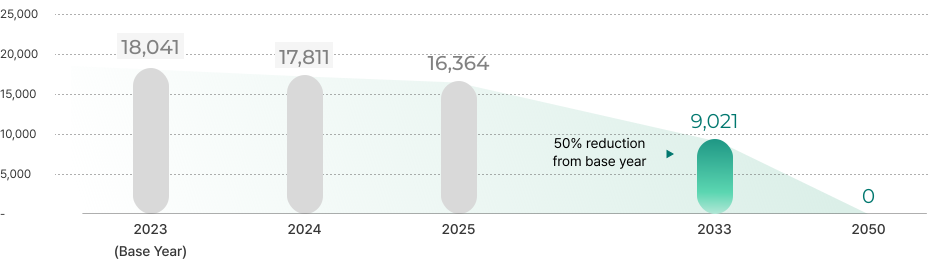
(Unit: Emissions (tCO₂eq))
| Category | Priority Target | Short- to Mid-term (by 2033) | Long-term (by 2050) |
|---|---|---|---|
| Product Innovation |
Promoting a low-carbon circular economy | Improving product energy consumption efficiency | Launching products embedded with low-carbon and resource circularity systems |
| Expanding the application of recycled materials | |||
| Operational Improvement | Adopting eco-friendly energy | Transitioning corporate fleet to eco-friendly vehicles | Achieving EV100 for corporate vehicles |
| Expanding solar power generation capacity | Expanding RE100 implementation across major business sites | ||
| Technology Innovation | Achieving carbon neutrality in production processes | Improving energy productivity through the adoption of high-efficiency equipment | Optimizing production process energy efficiency through digital technology integration |
Key Climate Change Management Indicators
| Indicator | Unit | 2023 Actual | 2024 Actual | 2025 Actual |
|---|---|---|---|---|
| GHG (Scope 1 and Scope 2) emissions | tCO₂eq | 18,041 | 17,811 | 16,364 |
| Energy consumption | GJ | 305,293 | 299,872 | 283,471 |
| Renewable energy use | MWh | 2,178 | 2,366 | 2,310¹⁾ |
1) Slight decrease in renewable energy use due to differences in solar irradiance