- Resource Circulation Governance
- Resource Circulation Strategy
- Resource Circulation and Waste Management Activities
Resource Circulation and Waste
Resource Circulation Governance
Resource Circulation Organization
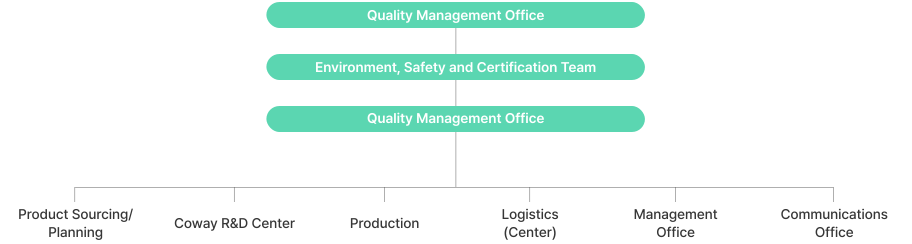
To create a sustainable resource circulation ecosystem, Coway operates an integrated company-wide response framework. The Quality Management Office leads resource circulation policy across the company. It continuously monitors how domestic and international environmental regulations are enacted and amended, along with the related detailed guidelines. Based on this monitoring, the Office provides tailored guidelines to relevant departments and proactively manages company-wide risk.
Resource Circulation Strategy
Establishing and Operating the Resource Circulation Framework
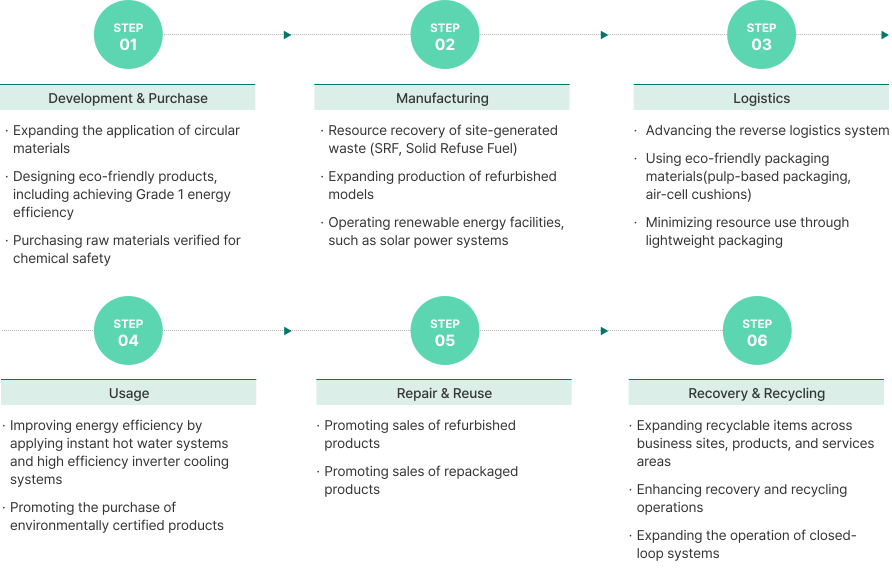
To achieve resource circulation, Coway is enhancing Life Cycle Assessment (LCA) management that integrates environmental factors throughout the entire product lifecycle, including development, procurement, recovery, and recycling. In line with the Act on Resource Circulation of Electrical and Electronic Equipment and Vehicles, Coway has established a recovery and recycling framework for waste resources. Coway requires new product development to meet a recycling rate of 75% or higher. When this requirement is not met, Coway replaces materials with recycled materials that ensure circularity, such as recycled plastic, or evaluates diverse in-process recycling approaches.
To enhance the effectiveness of resource circulation, Coway applies Circular Design principles from the product planning stage and has established and follows recovery and recycling process guidelines accordingly. In 2008, Coway also established an integrated management system that covers waste generated during service operations. Earlier, in 2007, it introduced the Refurbishment program. Together, these initiatives maximize resource efficiency and reinforce Coway's distinctive circular economy model.
For recycling suppliers, Coway conducts annual evaluations and monitoring to manage strict compliance with applicable laws and regulations. Evaluation items include licensing management, compliance with resource circulation regulations, and the results of the Korea Environment Corporation's on-site inspections. By supporting the execution of improvement initiatives, Coway manages environmental risk across the supply chain.
Resource Circulation Process
Waste Recycling Performance and Targets
-
Circular Economy
System Operations Expanding recycled-material product lines
(select water purifier models) -
Environmental Fee
Reduction Rate¹⁾ 90% Maintained -
Recycling Rate per
Product Unit 75% or higher -
Waste Recycling/Resource Recovery Rate²⁾
by 2030 2025
Target: 100%
Actual: 100%
1) Environmental Fee Reduction Rate: The ratio of the amount reduced through recovery and recycling to the environmental fees incurred
2) Calculated based on waste generated
2) Calculated based on waste generated
Key Initiatives for Resource Circulation
To minimize environmental impact across the entire resource circulation value chain, Coway is pursuing the following key initiatives.
Eco-friendly Product Design
and Verification
and Verification
Reviews and verifies recyclability from the planning and design stages of new products, and runs a filtering process that proactively addresses risks associated with hazardous substances
Optimization of Recovery and
Recycling Infrastructure
Recycling Infrastructure
Sets up recovery and recycling processes to reclaim resources after the end of the product life cycle, and manages legal compliance across the entire logistics flow
Data-driven Management
Framework
Framework
Manages resource circulation data, including collection volumes relative to product sales, to build a systematic framework that serves as the basis for formulating circular economy strategies
Resource Circulation and Waste Management Activities
Product Recovery Process
Closed-loop System
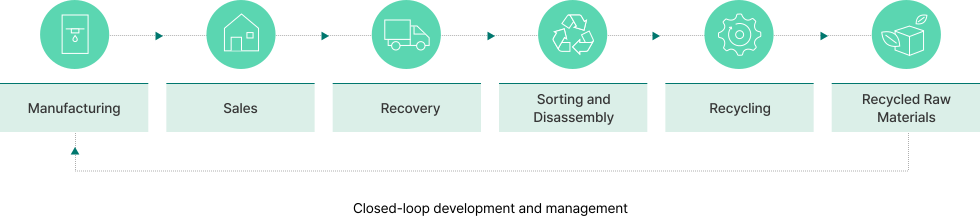
In October 2024, Coway established the Closed-loop resource circulation system, leveraging its proprietary product recovery infrastructure. Designed as a fully circular structure, the system extracts valuable materials from post-consumer products to supply as recycled raw materials. Alternatively, it also crushes and pelletizes plastics to be repurposed in the manufacturing of new products.
Coway currently runs an e-waste recovery program for its key product categories, including water purifiers, air purifiers, and dehumidifiers, and transparently registers and manages the number of units and weight recovered through the government system.
For new products, including induction cooktops, Coway also reviews recycling solutions and the selection of recycling suppliers from the product planning stage, ensuring that the resource circulation framework is in place before product launch. The Refurbishment program, in operation since 2007, fully disassembles products that have been returned due to changes of mind or have been used as store displays, and converts them into refurbished products through a remanufacturing process that includes the replacement of worn components.
Closed-loop Process
Used Filter Upcycling Program
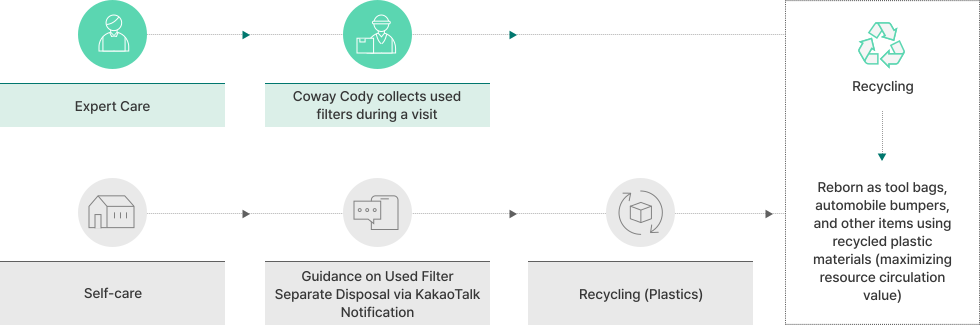
Coway runs the Used Filter Upcycling Program, which collects used water purifier filters and turns them back into resources. The collection method is divided into two streams based on customer type. Customers subscribing to professional management services have their used filters collected directly during visits by Coway's service professionals (Cody). Customers managing their products on their own are supported through two recovery options tailored to their usage environment.
Customers can return used filters in one of two ways: first, by placing them in the pre-provided collection bag, leaving them at a designated location, and requesting free courier or postal pickup; or second, by separating them as plastic waste in their daily lives in accordance with the provided guidelines. Recovered used filters undergo dismantling and sorting through specialized third-party recycling suppliers, with recyclable materials repurposed as circular raw materials for products such as tool bags and automobile bumpers.
Used Filter Upcycling Process
Use of Circular Raw Materials
Circular Utilization Assessment
To expand the application of PCR (post-consumer recycled) resins, Coway participates in the Ministry of Environment’s Circular Utilization Assessment. The system recommends improvements to design elements that hinder recycling at the disposal stage, and discloses related details when recommendations are not implemented. To enhance resource circularity, Coway completed the Circular Utilization Assessment for seven bidet models, ensuring recycled resin accounts for 10% of the total plastic weight. Coway has also prepared its water purifier product line for the assessment, and has completed preparations for the conformity review.
Application of Circular Raw Materials
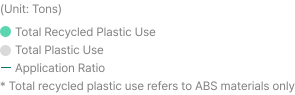
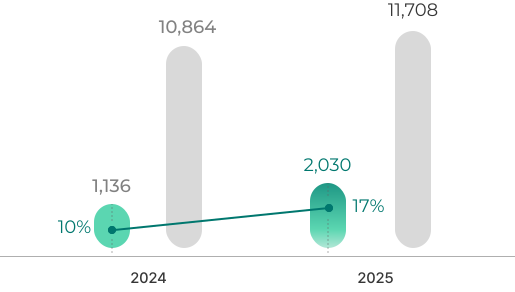
Through its closed-loop resource circulation framework, Coway converts recovered waste plastics into recycled raw materials via mechanical recycling processes. This process brought the total use of recycled plastic (ABS¹⁾) to 2,030 tons in 2025, exceeding the target of 1,600 tons by approximately 27%. Going forward, Coway will apply circular raw materials to more models and increase the volume used. These efforts will contribute to reducing GHG emissions and energy consumption, accelerating Coway's transition to a circular economy.
1) ABS (Acrylonitrile Butadiene Styrene): A thermoplastic resin with excellent impact resistance, heat resistance, and processability, used in applications such as exterior parts of home appliances, automobile components, and electronic device enclosures
Recycled Plastic Use
Resource Circulation Information and Engagement at Customer Touchpoints
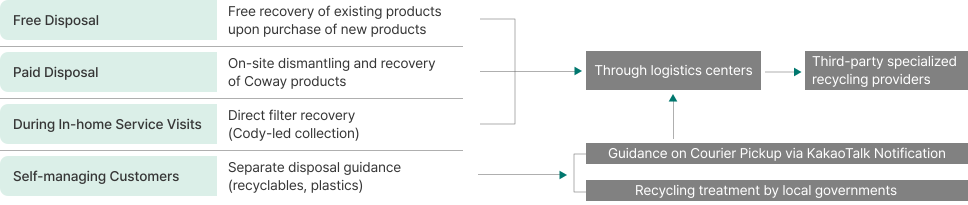
To encourage active customer participation at the product end-of-life and recycling phases, Coway adheres to e-waste management standards and runs a customer guidance framework. Product user manuals clearly outline how to dispose of and return used products and filters, the treatment procedures, and how to separately dispose of filters, making it easy for customers to take part in resource circulation. This enhances both the visibility and effectiveness of resource recovery.
E-waste Management Framework
Waste Treatment Process
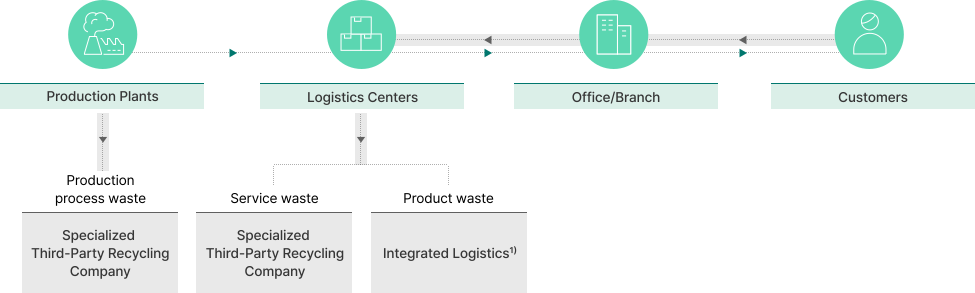
Coway quantitatively manages the waste generated across its business and continues to drive resource circulation activities aimed at increasing recycling rates, achieving Zero Waste, and reducing production and disposal costs. Waste from products, worksites, and services is processed through the sale of valuable resources and resource recovery¹⁾, and the recycled raw materials secured in this process are reintroduced into product development to reduce overall resource use.
1) Material recycling (Closed-loop), where waste plastics and similar materials are sorted and processed to be reintroduced as raw materials for Coway's products, and energy recovery (SRF) activities, where combustible materials are sorted and undergo a drying process
Waste Treatment Process